Seasonal allergies can affect your dental health by causing dry mouth, gum inflammation, and tooth sensitivity. Allergy medications and mouth breathing reduce saliva, which normally protects your teeth and gums, raising the risk of cavities and irritation. Post-nasal drip may introduce bacteria, worsening these issues. Staying hydrated, maintaining good oral hygiene, and managing indoor air quality can help. Keep going to learn expert tips on protecting your smile during allergy season.
Key Takeaways
- Allergies and their medications can cause dry mouth, increasing cavity and gum disease risk.
- Post-nasal drip introduces more bacteria, disrupting oral microbiome balance and promoting oral health issues.
- Mouth breathing and dehydration from allergies reduce saliva flow, leading to increased sensitivity and decay.
- Allergy-related gum inflammation and mouth sores can worsen if oral hygiene is neglected.
- Proper hydration, oral hygiene, and consulting a dentist help manage allergy impacts on dental health.
How Allergies Affect Your Oral Environment
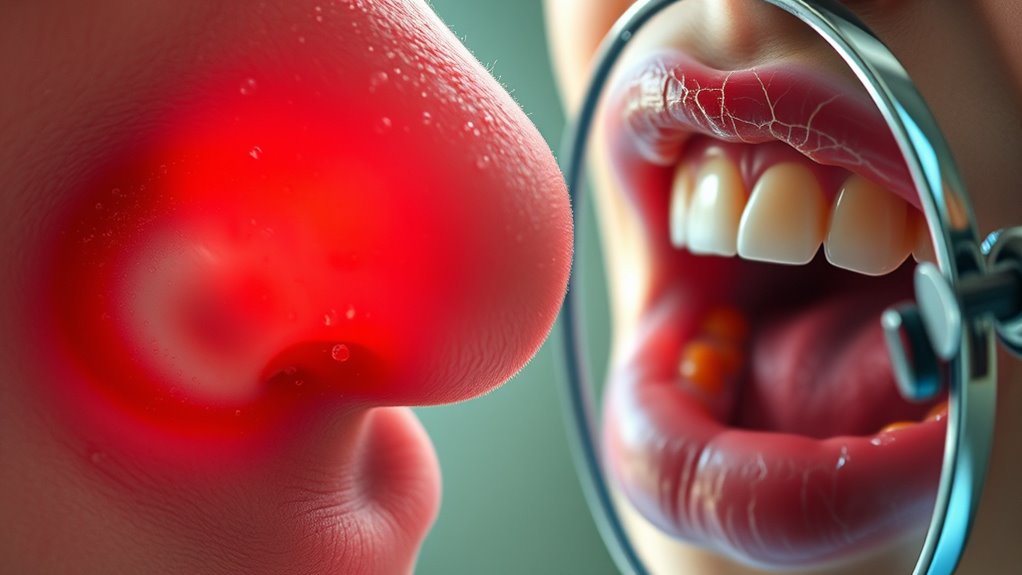
When allergies flare up, they don’t just affect your nose and eyes—they can also disrupt your oral environment. Allergy medications, especially antihistamines, often cause dry mouth, reducing saliva production. Saliva is essential for maintaining a healthy oral microbiome, which helps control harmful bacteria and neutralize acids. When your oral microbiome is imbalanced, you’re more prone to issues like cavities, gum inflammation, and bad breath. Additionally, post-nasal drip from allergies can lead to increased bacteria in your mouth, further disturbing this delicate balance. Using air purifiers with HEPA filters can help reduce airborne allergens and improve indoor air quality. Being aware of how allergy treatments impact your oral health allows you to take proactive steps, like staying hydrated and practicing good oral hygiene, to protect your mouth during allergy season.
Common Dental Problems Linked to Allergies
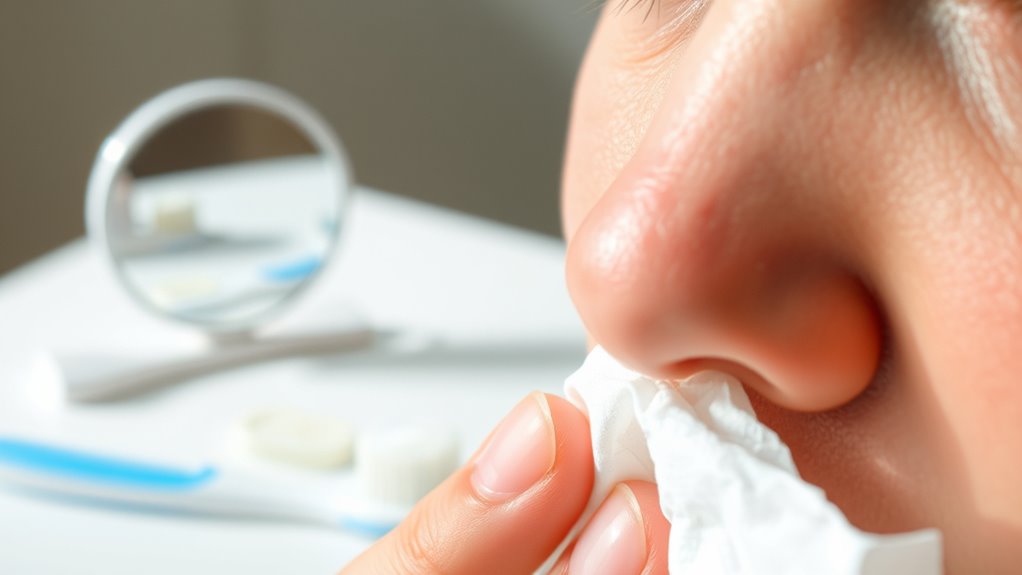
Allergies can contribute to several common dental problems that many people overlook. Pollen exposure and allergy medications often lead to issues like gum inflammation, tooth sensitivity, and mouth sores. These problems may result from increased irritation or dry mouth caused by allergy medications. To better understand, consider this table:
| Dental Problem | Cause Related to Allergies | Symptoms |
|---|---|---|
| Gum inflammation | Pollen exposure triggers immune response | Swollen, tender gums |
| Tooth sensitivity | Dry mouth from allergy meds | Sharp pain when eating hot/cold foods |
| Mouth sores | Allergic reactions or irritants | Painful ulcers in mouth |
| Dry mouth | Side effect of allergy medications | Sticky, dry feeling |
Additionally, salivary flow can be affected by allergy medications, further exacerbating dry mouth. Being aware of these links helps you manage dental health during allergy season effectively.
The Role of Dry Mouth and Mouth Breathing
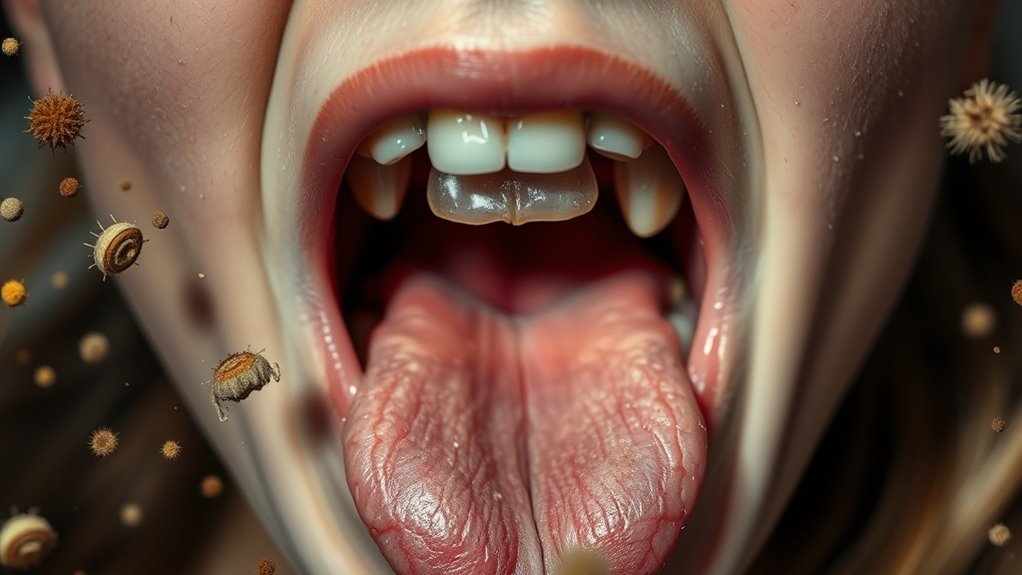
Dry mouth and mouth breathing often worsen dental health issues during allergy season because they reduce saliva production, which is crucial for protecting your teeth and gums. When salivary flow decreases, your mouth becomes dry, leading to mucosal dryness that causes discomfort and increases the risk of decay. Mouth breathing bypasses natural filtering, drying out the oral tissues and diminishing saliva’s ability to neutralize acids and wash away bacteria. This mucosal dryness creates an environment conducive to plaque buildup and tooth enamel erosion. As your saliva’s protective functions weaken, you’re more vulnerable to cavities, gum irritation, and bad breath. Incorporating high-quality projectors into your home setup can provide a more immersive viewing experience, helping you relax and alleviate some stress caused by allergy symptoms. Managing dry mouth and encouraging nasal breathing can help maintain healthy salivary flow, offering essential protection during allergy season.
Tips to Protect Your Teeth During Allergy Season

To protect your teeth during allergy season, focus on maintaining ideal oral hygiene and managing symptoms that can dry out your mouth. Allergy medications like antihistamines may cause dry mouth, so stay vigilant. Incorporate effective oral hygiene routines, such as brushing twice daily with fluoride toothpaste and flossing regularly, to remove plaque and prevent cavities. Rinse with water after using allergy medications to help keep your mouth moist. Drinking plenty of water throughout the day also helps combat dryness. Avoid sugary snacks and drinks that can feed bacteria and lead to decay. Consider using a humidifier at night to maintain moisture in the air and keep your mouth from drying out. Additionally, using AI-powered health tools can help monitor your symptoms and suggest personalized oral care tips. These simple steps help protect your teeth during allergy season and support overall oral health.
When to Consult Your Dentist About Allergy-Related Dental Issues

If you notice persistent or worsening dental symptoms during allergy season, it’s important to consult your dentist promptly. Oral sensitivity, caused by allergy medications or irritation, can sometimes mask underlying issues. Seek professional advice if you experience:
| Symptom | When to See Your Dentist |
|---|---|
| Persistent tooth pain | If pain lasts more than a few days despite allergy treatment. |
| Increased oral sensitivity | When sensitivity interferes with eating or brushing. |
| Gum swelling or bleeding | If symptoms don’t improve after switching allergy meds. |
Addressing these concerns early helps prevent complications and ensures your dental health stays on track during allergy season. Remember, staying informed about dental health management can help you navigate allergy-related issues more effectively.
Frequently Asked Questions
Can Allergy Medications Cause Dental Erosion or Sensitivity?
Allergy medication impacts your oral health by potentially increasing dental erosion risks and causing sensitivity. Many antihistamines dry out your mouth, reducing saliva flow, which normally protects teeth from acid wear. This dryness can lead to increased vulnerability to dental erosion and sensitivity. You should stay hydrated, maintain good oral hygiene, and consult your dentist if you notice heightened sensitivity or erosion, ensuring your allergy medications don’t negatively affect your teeth.
How Do Seasonal Allergies Influence Oral Ph Levels?
You might wonder how seasonal allergies influence your oral pH balance. Allergies can cause you to breathe through your mouth more often, which dries out your saliva and reduces its ability to neutralize acids. This decrease in saliva production can lower your oral pH, making your mouth more acidic. An acidic environment promotes tooth enamel erosion and sensitivity, so managing allergy symptoms helps maintain healthy saliva flow and pH balance.
Are There Specific Dental Products Recommended for Allergy Sufferers?
You should consider using hypoallergenic toothbrushes to reduce irritation and fluoride mouthwashes to strengthen your teeth and combat dryness. These products are specifically designed for sensitive mouths, making them ideal for allergy sufferers. By choosing gentle, allergy-friendly dental products, you can maintain good oral health without aggravating your allergies. Always check labels and consult your dentist to make sure the products suit your specific needs.
Can Allergy Symptoms Mask Underlying Dental Infections?
The saying “don’t judge a book by its cover” rings true here. Allergy symptoms like sinus infections and gum inflammation can hide more serious dental infections. You might think it’s just allergies, but persistent pain or swelling could signal an underlying issue. Always see your dentist if symptoms linger, as untreated infections can worsen, and what seems like allergies may actually be a sign of a dental problem.
Do Allergy-Related Mouth Issues Affect Long-Term Oral Health?
You might wonder if allergy-related mouth issues impact your long-term oral health. Pollen-induced dry mouth and mouth breathing effects can reduce saliva, increasing the risk of cavities and gum problems over time. Persistent dryness hampers natural cleaning, while mouth breathing can cause gum irritation. To protect your oral health, stay hydrated, manage allergy symptoms, and visit your dentist regularly to catch issues early and maintain a healthy smile.
Conclusion
During allergy season, your oral health can take a hit—dry mouth and mouth breathing are common culprits. Did you know that over 50% of allergy sufferers experience increased dental problems during this time? Staying vigilant by practicing good oral hygiene and visiting your dentist when needed can make a big difference. Don’t let allergies compromise your smile—take proactive steps now to protect your teeth and keep your mouth healthy all season long.