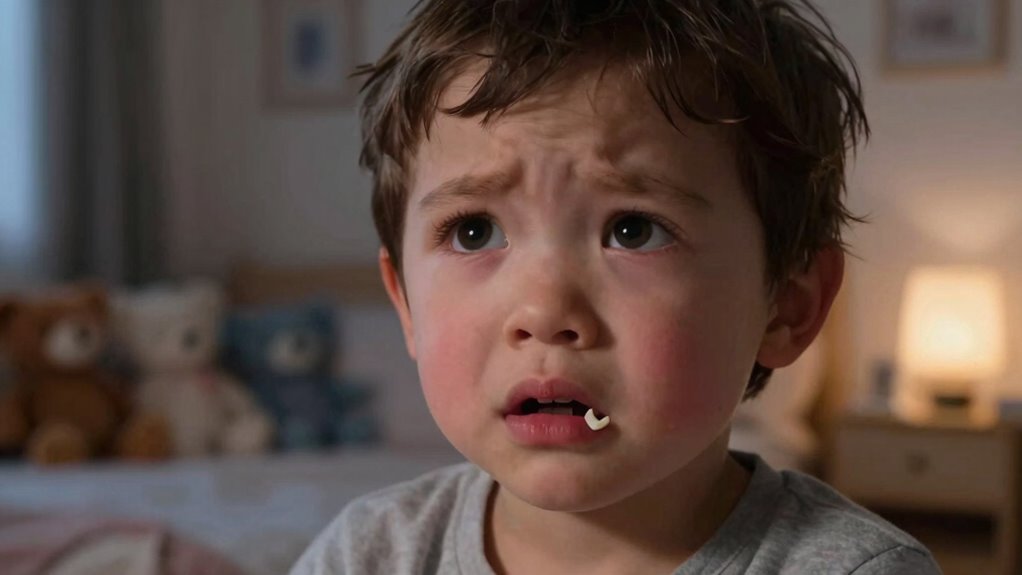
Losing a tooth can stir up big feelings at bedtime because it signals a change in your child’s normal routine and comfort. They might feel scared, sad, or frustrated, especially when trying to settle down for sleep. These emotions can make them cling to familiar routines or resist bedtime activities. Plus, worries about pain, appearance, or new fears can surface. Understanding these feelings helps you support them through this milestone—if you keep exploring, you’ll discover ways to ease their shift.

Turn the school run and nap time into listening time
- Thousands of audiobooks, podcasts and originals
- Listen on your phone, tablet or Echo — also offline
- Cancel anytime
Key Takeaways
- Losing a tooth can trigger fear, sadness, or frustration, especially when children settle down for bed and feel more emotional.
- Bedtime routines may feel disrupted, causing children to cling to familiar rituals for reassurance and comfort.
- The experience can reignite discomfort or sensitivity from teething, increasing anxiety and making relaxation difficult.
- Big feelings are normal, and understanding this helps children cope with the emotional impact of losing teeth.
- Consistent routines and reassurance provide stability, helping children manage their emotions during this transitional time.
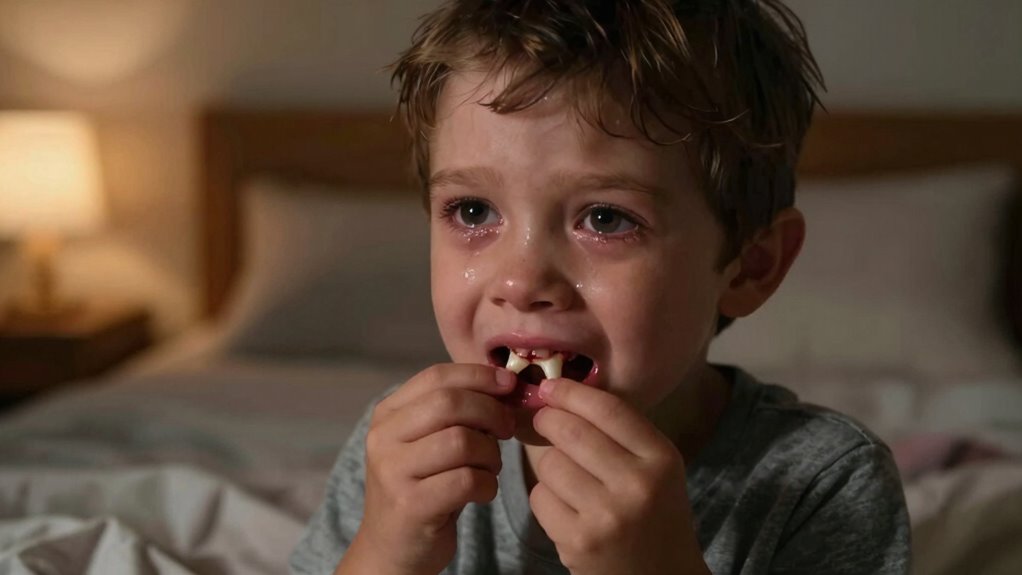
Losing a tooth can feel like a big event, especially when it happens right before bedtime. It’s a milestone that can bring a mix of excitement and worry, and those feelings often surface when you’re trying to settle in for the night. For many kids, losing a tooth triggers a flood of big emotions—fear, sadness, or even frustration—making it tough to stick to usual bedtime routines. It’s not just about the missing tooth; it’s about what that change represents and how it disrupts the comfort and stability they crave at bedtime.
Losing a tooth at bedtime can cause big feelings and disrupt your child’s sense of comfort and routine.
You might notice your child fussing more than usual or resisting their typical bedtime activities. Part of this is because the experience of losing a tooth can stir up feelings that are hard to process. Kids often associate their teeth with routines like brushing, flossing, or even visiting the dentist, and losing one can make those routines feel more uncertain or upsetting. They may worry about pain, appearance, or whether other teeth will fall out soon. These fears can amplify teething discomfort, which, even after the initial phase, can resurface as sensitivity or soreness around the gums. That lingering discomfort makes it harder for your child to relax, especially when they’re already feeling vulnerable from the tooth loss.
At bedtime, routines are supposed to bring comfort and predictability. But when a tooth falls out just before bed, it can throw everything off. Your child might cling to familiar rituals like reading stories or cuddling, seeking reassurance that everything is okay. They may also become more anxious or restless, trying to understand what just happened or fixate on the missing tooth. This heightened emotional state can make it difficult for them to wind down, turning bedtime into a challenge instead of a calming end to the day. You might find yourself needing to give extra reassurance, explaining that losing teeth is normal, and that it doesn’t mean they’re sick or hurt. Recognizing that big feelings are a common part of childhood development can help you approach these moments with patience and understanding.
Supporting your child through this time can also include reassuring them about the process of losing teeth, which is a natural part of growing up and helps them understand that it’s temporary and normal. Understanding that these big feelings are normal helps you support your child through the transition. Keep bedtime routines gentle and predictable, offering comfort without rushing. Acknowledge their feelings and remind them that losing a tooth is a sign of growing up. You can also help ease teething discomfort with gentle remedies or over-the-counter options, making sure they feel cared for and safe. Additionally, providing consistent reassurance can help soothe their worries and foster a sense of security. Recognizing that emotional reactions are a natural part of child development can empower you to respond with empathy and patience. By providing reassurance and maintaining familiar routines, you help your child navigate these big feelings, turning a potentially upsetting moment into a natural step in their growth.
children's bedtime routine reassurance toys
As an affiliate, we earn on qualifying purchases.
As an affiliate, we earn on qualifying purchases.
Frequently Asked Questions
How Can Parents Comfort Children Experiencing Bedtime Anxiety?
To comfort your child experiencing bedtime anxiety, reassure them with gentle words and establish calming routines. Incorporate fun Tooth Fairy traditions to make losing teeth exciting, not scary, and reinforce positive dental hygiene routines. You can also create a cozy environment, use a nightlight, and stay with them until they feel safe. These strategies help ease fears, making bedtime a more comforting experience for your child.
What Signs Indicate a Child’s Emotional Response to Losing Teeth?
You’ll notice your child showing signs like irritability, clinginess, or difficulty sleeping, which indicate their emotional response to losing teeth. They might also ask questions about the Tooth fairy traditions or express worries about growing up. These reactions connect to developmental milestones, showing they’re processing changes. Comfort them by sharing stories and reassurance, helping them feel secure during this big shift.
Are There Specific Ages More Prone to Big Feelings After Losing Teeth?
You’ll notice that children around ages 5 to 7 are more prone to big feelings after losing teeth, as they’re exploring key growth milestones. During this time, the excitement of the Tooth Fairy and growth changes can evoke strong emotions at bedtime. These feelings may be intensified by their understanding of growing up, making it essential to offer reassurance and comfort as they process these major milestones.
How Does Losing Teeth Affect a Child’s Self-Esteem?
Losing teeth can impact your child’s self-esteem, especially if they feel self-conscious about their appearance. The Tooth Fairy traditions can boost confidence by making the experience exciting and positive. Encouraging good dental health habits helps your child feel proud of taking care of their teeth. When they see their progress and receive special rewards, it reinforces their self-worth and helps them feel more comfortable during bedtime and beyond.
What Activities Help Children Cope With Tooth Loss and Bedtime Fears?
You can help your child cope with tooth loss and bedtime fears by involving them in fun activities like writing a letter to the Tooth Fairy or creating a special bedtime story about their lost tooth. These activities make the experience exciting rather than scary, boosting their confidence. Sharing stories about the Tooth Fairy’s visit or reading comforting bedtime stories helps ease any worries and makes bedtime more enjoyable.
Conclusion
As the night settles in, you might notice those quiet moments when your little one’s tears shimmer in the moonlight, revealing feelings they can’t quite put into words. Losing a tooth isn’t just about a gap — it’s about the big, swirling emotions that come with it. Remember, these feelings are like stars guiding their growth, shining brighter through the darkness. Embrace the night’s gentle whisper, knowing these moments are shaping their brave, beautiful heart.
Cold & flu season Picks
humidifiers
As an affiliate, we earn on qualifying purchases.