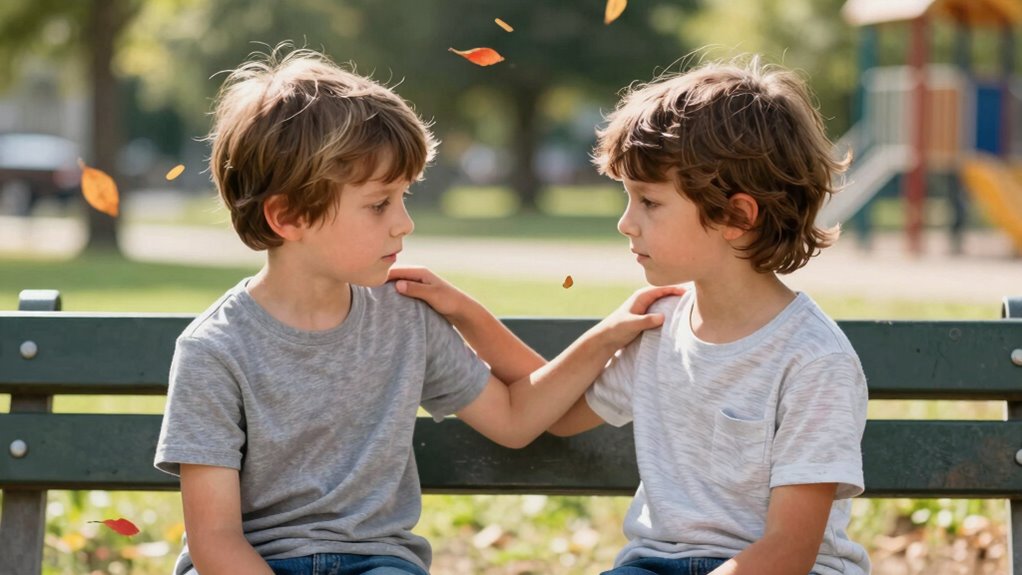

To help kids handle friendship shake-ups before summer, support them in acknowledging their emotions and letting them express how they feel. Encourage constructive responses to conflicts, like using “I” statements, and remind them that friendships naturally change over time. Boost their confidence with praise and activities that build resilience. Reassure them that their worth isn’t tied to current friendships and that new connections are ahead. If you want to learn more about guiding your child through these social changes, keep exploring these helpful strategies.
Key Takeaways
- Acknowledge and validate children’s emotions about friendship changes to foster healthy emotional processing.
- Teach children that friendship shifts are normal and part of growth, emphasizing their ongoing self-worth.
- Encourage open conversations to help kids express feelings and understand social dynamics involved.
- Promote resilience by highlighting past successes and fostering confidence through activities and social skills.
- Guide children to see conflicts as opportunities for problem-solving and developing stronger social relationships.
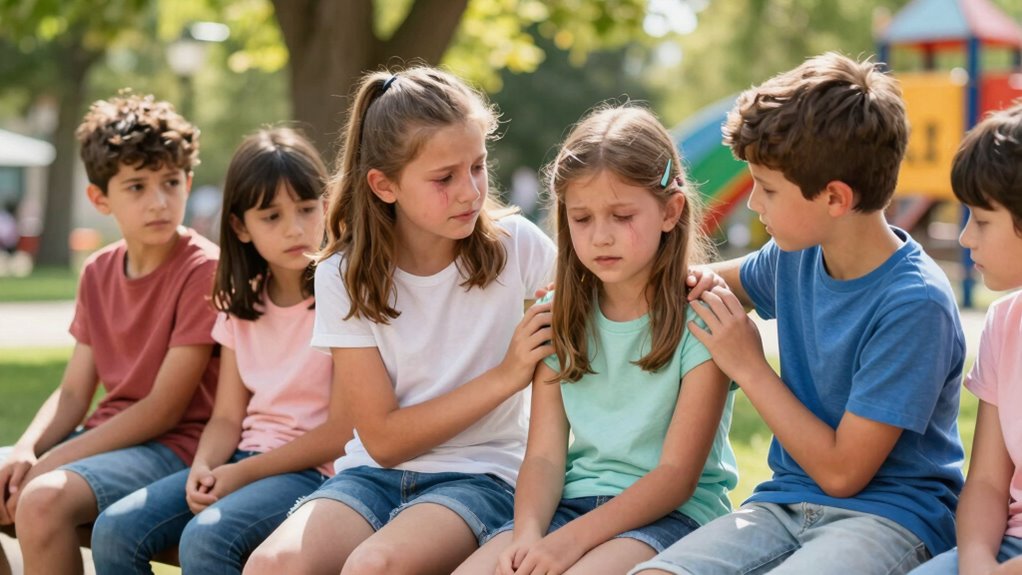
Have you ever wondered how to help your child navigate the emotional ups and downs of friendship changes? As summer approaches, kids often experience shifts in their social circles, which can lead to feelings of confusion or hurt. During these times, peer conflict may arise, making it essential for you to support your child’s emotional resilience. When children face friendship shake-ups, they learn important lessons about handling disappointment and standing up for themselves. Your role is crucial in guiding them through these moments with understanding and practical advice.
First, acknowledge your child’s feelings without dismissing them. If they’re upset about a friendship ending or shifting, let them know it’s okay to feel sad or frustrated. Validating their emotions helps them process their experiences healthily. Encourage open conversations where they can express what they’re feeling and thinking. This creates a safe space for emotional expression, which is vital as they learn to manage complex social situations.
Validate your child’s feelings and encourage open conversations to help them process friendship changes healthily.
Next, teach your child about peer conflict — that disagreements are a normal part of friendships. When conflicts happen, instead of avoiding them, guide your child on how to respond constructively. For example, encourage them to use “I” statements, like “I felt hurt when…” to communicate their feelings clearly. Help them see conflicts as opportunities to develop problem-solving skills and emotional resilience. Reinforce that friendships can sometimes have disagreements, but how they handle these disagreements makes a difference. Building awareness about social dynamics can help children better understand the reasons behind friendship changes and conflicts. Recognizing that conflicts are an unavoidable aspect of social relationships can prepare children to handle these situations with confidence. Additionally, discussing the importance of empathy can foster understanding and reduce misunderstandings in friendships.
To bolster emotional resilience, remind your child of their strengths and past successes in overcoming challenges. Focus on building their confidence by praising their efforts to resolve conflicts or to be kind, even when situations are tough. Encourage activities that promote self-esteem, like hobbies or team sports, which can also help them develop social skills and coping strategies. Additionally, teaching children about emotional resilience can empower them to face social changes more effectively.
Lastly, prepare your child for future friendship changes by discussing the idea that friendships evolve naturally over time. Emphasize that losing or changing friends doesn’t mean they are unworthy or unloved. Instead, it’s part of growing up and learning about themselves and others. Encourage them to stay open to new friendships and to remember that their value isn’t defined by who their friends are at any given moment. Teaching your child about relationship dynamics can help them navigate these transitions with a healthier perspective.

Open The Joy Mindful Crafts Kit – Kids Emotional Regulation & Art
- Complete Mindfulness Craft Kit: Includes all materials for four projects
- Creative Play for Emotional Regulation: Make pompom creatures to represent thoughts
- Mindful Mosaic Art for Focus: Design mosaic frames with interchangeable quotes
As an affiliate, we earn on qualifying purchases.
As an affiliate, we earn on qualifying purchases.
Frequently Asked Questions
How Can I Tell if My Child Is Truly Upset About a Friendship Change?
You can tell if your child is truly upset about a friendship change by observing their emotional awareness and reactions to peer interactions. If they seem withdrawn, express sadness, or talk about feeling lonely or misunderstood, these are signs they’re genuinely affected. Pay attention to changes in their mood or behavior after social interactions, and encourage open conversations to understand their feelings better. This helps you support them through friendship shake-ups effectively.
What Are Signs My Child Is Struggling With Social Rejection?
If your child starts drifting into social withdrawal like a lone boat in a vast sea, they might be struggling with social rejection. Watch for emotional signs like tears, irritability, or clinginess, which can signal inner turmoil. Notice if they avoid friends or social settings, hinting at feelings of rejection. These signs are their silent cries, telling you they need support to navigate these stormy waters.
How Do I Encourage My Child to Make New Friends?
You can encourage your child to make new friends by using playdate strategies that boost confidence and social skills. Arrange short, supervised playdates with different peers and encourage your child to practice friendship role play, helping them learn how to introduce themselves and start conversations. Praise their efforts, and remind them that building friendships takes time. These approaches make social interactions feel more manageable and fun, fostering new connections.
What if My Child Doesn’T Want to Talk About Friendship Issues?
Imagine your child pulls away when you ask about their friendships. You can’t force a talk, so show parental empathy by gently letting them know you’re there without pressure. Sometimes, peer influence makes kids hesitant to discuss friendship issues openly. Respect their pace, offer a listening ear, and create a safe space. Trust that over time, your child may feel more comfortable sharing their feelings naturally.
When Should I Seek Professional Help for My Child’s Social Problems?
You should seek professional help if your child’s social problems persist, worsen, or profoundly impact their daily life. Consider therapy options like social skills training or counseling, which can help your child develop better peer interactions and emotional resilience. If you notice ongoing withdrawal, difficulty making friends, or signs of anxiety or depression, consulting a mental health professional can provide tailored support and strategies to improve their social well-being.
Conclusion
Remember, friendship shake-ups are like storms—they may seem fierce now, but they often clear the way for brighter days ahead. By listening, offering reassurance, and teaching resilience, you help your kids weather these turbulent times and emerge stronger. Your support is the steady anchor in their sea of changing friendships, guiding them toward calmer waters and new friendships on the horizon. With patience and understanding, you’re planting seeds for their confidence to blossom.