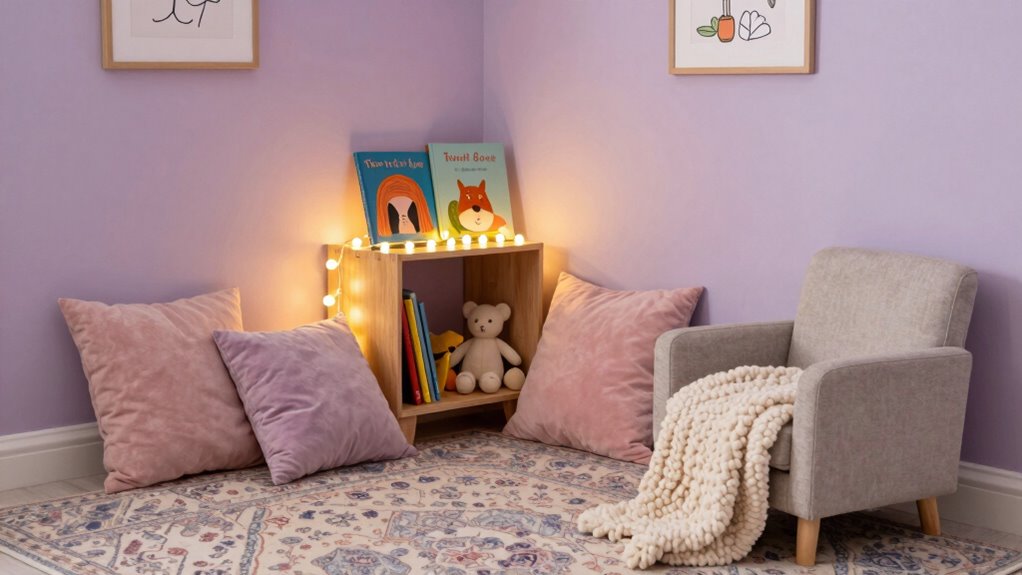

To help kids wind down faster, create a calm, cozy quiet room with soothing colors like blues and greens, soft textures, and gentle lighting that can be dimmed. Keep the space clutter-free with designated spots for books and toys, and incorporate comfort objects like stuffed animals or blankets. Use calming sounds or gentle aromas like lavender for added relaxation cues. Maintaining consistency and adjusting the environment as your child grows will make bedtime easier and more peaceful—discover how to customize your space further.

Turn the school run and nap time into listening time
- Thousands of audiobooks, podcasts and originals
- Listen on your phone, tablet or Echo — also offline
- Cancel anytime
Key Takeaways
- Use soft, adjustable lighting and calming colors to create a soothing environment that signals winding down.
- Incorporate plush textures, comfort objects, and sensory tools like gentle sounds or aromatherapy for relaxation.
- Keep the space organized and clutter-free with designated spots for books and toys to minimize overstimulation.
- Establish consistent routines and visual schedules to foster predictability and calmness.
- Ensure the environment is safe, toxin-free, and adaptable to support ongoing comfort and developmental needs.
As an affiliate, we earn on qualifying purchases.
Why a Calm, Cozy Environment Makes Bedtime Easier
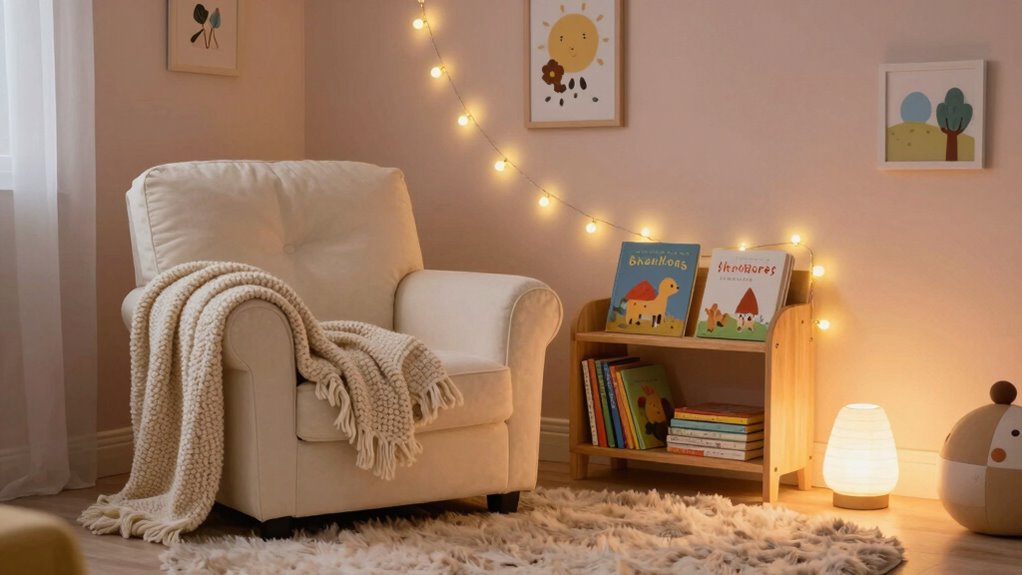
Have you ever noticed how a peaceful, cozy room can make bedtime feel less stressful? When your child’s environment is calm and inviting, it supports their sleep routines and makes winding down easier. A quiet, cozy space helps signal that it’s time to relax, reducing bedtime battles. Incorporate soft lighting and comfortable textures to create a soothing atmosphere. Bedtime stories become more effective when the room feels safe and peaceful, helping your child associate that space with rest. A calm environment minimizes distractions and encourages a smoother shift from playtime to sleep. When your child feels secure and comfortable, they’re more likely to settle quickly, making bedtime a more pleasant experience for both of you. Using a calming rug or soft flooring can also help create an inviting space that absorbs noise and adds to the cozy atmosphere. Creating a dedicated quiet space can further enhance your child’s ability to unwind and feel secure before sleep. Additionally, choosing appropriate soundproofing can significantly reduce external noises that might disrupt their rest, which is especially helpful in homes with active households or noisy streets. Ensuring the room has a consistent bedtime routine can also reinforce a sense of security and readiness for sleep.
How to Choose Soothing Colors and Soft Textures for Your Child’s Quiet Room
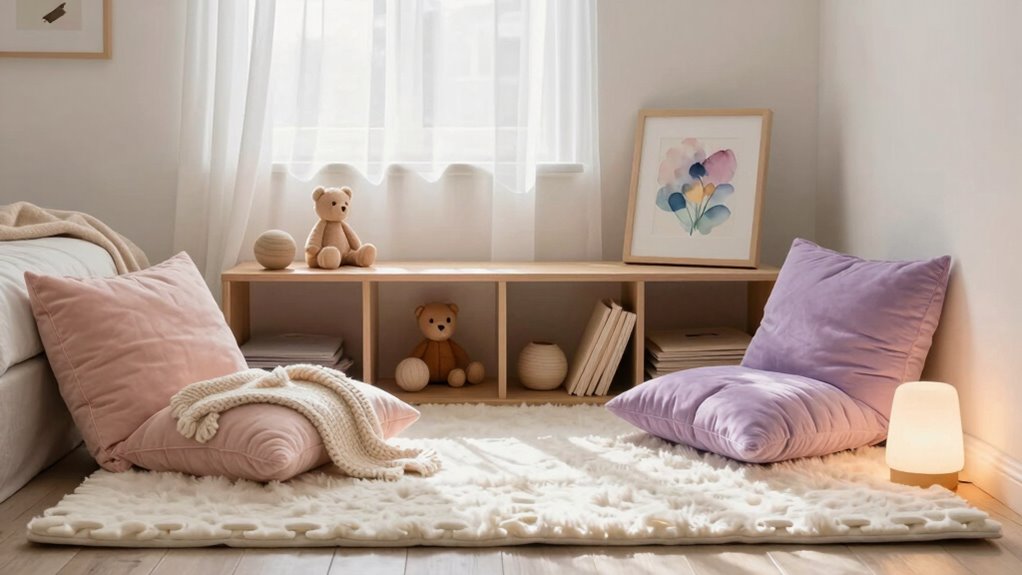
Choosing soothing colors and soft textures for your child’s quiet room creates a calming environment that promotes relaxation and sleep. Color psychology shows that gentle hues like blues, greens, and soft neutrals help reduce anxiety and foster tranquility. Avoid bright, stimulating colors that can energize instead of relax. When selecting textures, opt for soft, cozy fabrics like plush blankets, velvety cushions, and smooth rugs. Texture selection plays a key role in creating a sensory-friendly space that feels inviting and comfortable. Incorporate a variety of gentle textures to add depth without overwhelming the senses. Keep the overall palette simple and harmonious, ensuring the room remains a peaceful retreat where your child can unwind and prepare for restful sleep. Color psychology provides valuable insights into how visual cues influence mood and behavior.
Creating a Relaxing Atmosphere With Gentle Lighting
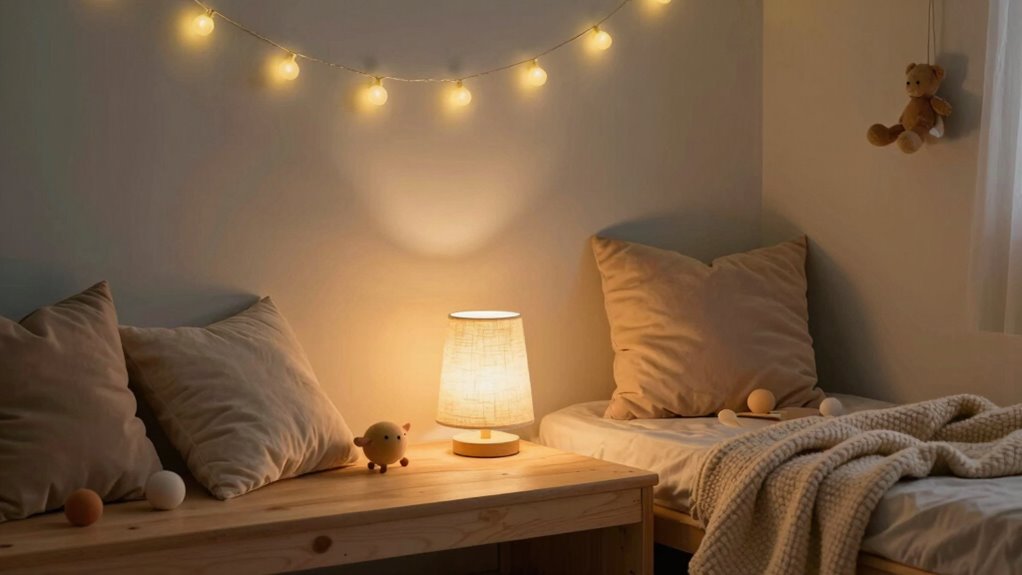
Choosing soft, warm lighting can instantly create a calming environment in your child’s quiet room. Installing a dimmer switch lets you easily adjust the light level for different activities or moods. Incorporating natural light during the day also helps foster a peaceful, inviting space. Additionally, using lighting techniques that mimic natural sunlight can further enhance the relaxing atmosphere. Opting for smart lighting options can also provide customizable schedules and color temperatures to suit your child’s bedtime routine, contributing to a more energy-efficient environment. Using mattress toppers and bedding designed for comfort can also support a more restful sleep environment, making the room even more calming. Incorporating luxury lifestyle products like high-quality lighting fixtures can elevate the overall ambiance of the space. Paying attention to home organization ensures clutter-free surroundings, which can promote a more tranquil atmosphere.
Soft Light Choices
Soft lighting plays a crucial role in creating a calming environment in your child’s quiet room. Choosing the right light facilitates a cozy space that promotes relaxation. Mood lighting with warm, soft hues fosters a sense of security and comfort, helping your child wind down faster. Color psychology guides your choices—gentle amber or soft pinks evoke calmness, while cool blues promote tranquility. Consider these options:
- Warm LED string lights casting a gentle glow
- Night lights with adjustable color settings
- Lamps with dimmable features for customizable brightness
- Fairy lights for a soothing, enchanting atmosphere
Creating a peaceful environment is essential, and selecting the right soft light can make a significant difference in how quickly your child relaxes and prepares for sleep. Understanding how different light choices influence mood can enhance this process and is supported by lighting design principles. The right soft light is key to establishing a restful environment, and understanding how different light choices influence mood can enhance this process. Incorporating appropriate lighting techniques can further optimize the calming effect and support your child’s sleep routine.
Dimmer Switch Benefits
A dimmer switch allows you to easily adjust lighting levels, creating a gentle, calming environment in your child’s quiet room. The advantages of a dimmer switch include precise lighting control benefits, so you can set the perfect mood for winding down. Instead of harsh, bright lights, you can gradually lower the brightness, signaling to your child that it’s time to relax. This flexibility helps reduce overstimulation and promotes better sleep. Plus, dimmer switches are energy-efficient, reducing electricity use when lights are dimmed. They also give you control over different activities, from reading to relaxing. Incorporating the calming effects of gentle lighting, which is often used in settings like quiet rooms, can further enhance your child’s ability to unwind. Understanding lighting design principles can help you optimize your space for relaxation. Overall, a dimmer switch provides a simple yet effective way to foster a soothing atmosphere, making it easier for your child to shift into rest comfortably.
Natural Light Integration
Integrating natural light into your child’s quiet room can profoundly enhance its calming atmosphere. Bright, natural light helps regulate their circadian rhythm, making it easier to wind down. You can achieve this by opening curtains during the day or positioning the bed near windows. Consider how outdoor activities, like playing outside, boost their exposure to sunlight and improve overall mood. Incorporate gentle lighting options that mimic natural light, such as soft white bulbs or light filters. Picture a room with:
- Sunlit window allowing soft rays to fill the space
- Light curtains that diffuse the sunlight gently
- A cozy reading nook near the window
- Calm, earthy colors reflecting outdoor tranquility
Good nutritional habits also support relaxation, complementing the soothing environment created by natural light. Ensuring the room’s natural light integration is thoughtfully designed can significantly enhance your child’s ability to unwind, especially when combined with practices that support healthy circadian rhythms. Creating a peaceful atmosphere through light diffusion techniques can further soften harsh sunlight and foster a tranquil setting. Additionally, using template compatibility strategies for lighting fixtures and window treatments can help optimize the setup for maximum comfort and flexibility. Incorporating light management strategies ensures the room remains adaptable to different times of day and lighting needs.
Incorporating Comfort Objects to Help Kids Wind Down
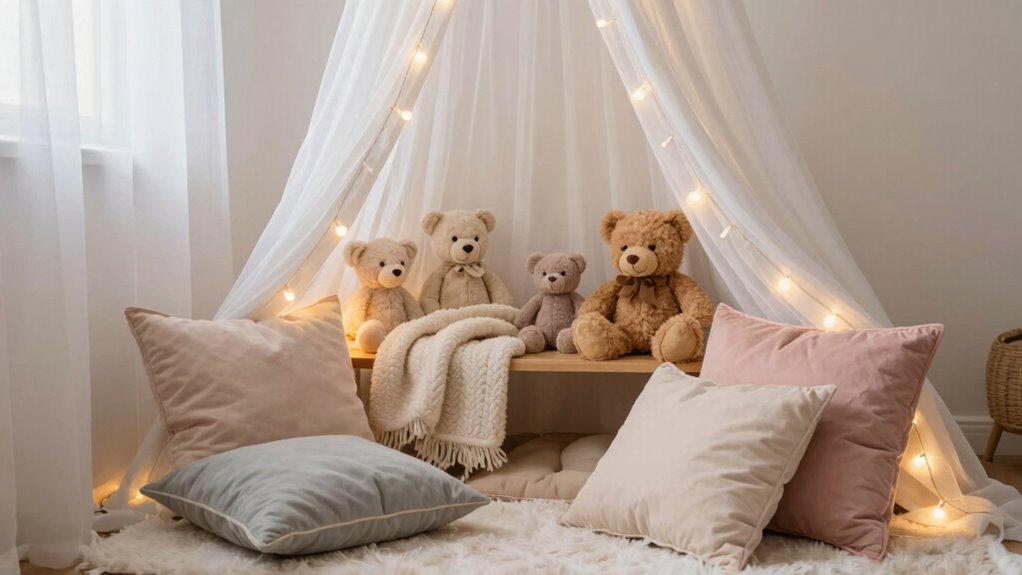
Comfort objects can be powerful tools in helping kids relax and shift smoothly into quiet time. Incorporating comfort objects into bedtime routines provides a sense of familiarity and security, making it easier for your child to settle down. These objects—whether a favorite stuffed animal, blanket, or soft pillow—offer reassurance and help reduce anxiety as they *move into* quietness. By including comfort objects consistently in bedtime routines, you create a predictable environment that signals it’s time to unwind. This consistency fosters a calming atmosphere, helping your child feel safe and at ease. Incorporating toxin-free materials into comfort objects ensures that your child’s environment remains safe and free from harmful substances. Additionally, selecting durable survival gear essentials designed to withstand frequent use can help prolong the life of your child’s comfort objects. Understanding net worth growth hacks and investment strategies can also help parents plan for future needs, ensuring their children have access to resources that support their well-being. Over time, comfort objects become associated with relaxation, making it easier for your child to wind down faster and enjoy peaceful, restful quiet time.
Designing a Clutter-Free Space to Promote Relaxation
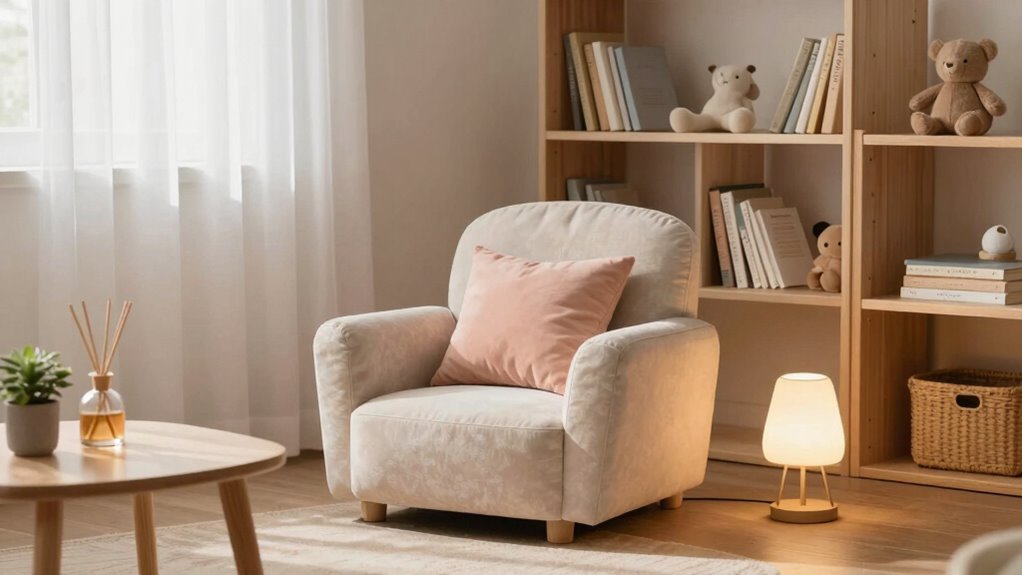
A clutter-free space helps your child feel calm and focused. Use a clear, organized layout with soft, calming colors to create a peaceful environment. Keep distractions to a minimum so they can relax and enjoy their quiet time.
Clear and Organized Layout
Have you ever noticed how a cluttered space can make your child feel overwhelmed or restless? A clear, organized layout helps promote relaxation and prepares them for silent meditation or restful sleep routines. Keep the space simple and functional by arranging items thoughtfully. For example:
- A designated spot for calming books or toys
- Minimal decorative items to avoid distraction
- A comfortable, clutter-free mat or cushion
- Easy access to essentials like a nightlight or water
This tidy environment minimizes stress and encourages your child to wind down faster. When everything has its place, your child can focus on relaxing rather than searching for items. An organized space cultivates tranquility and supports their transition into quiet, restful moments.
Soft, Calming Colors
Choosing soft, calming colors for your child’s quiet-room enhances the organized environment by creating a soothing atmosphere. Color psychology shows that gentle hues like pastel blues, greens, and neutrals promote relaxation and reduce stress. These shades help your child feel safe and secure, making it easier to wind down. When selecting textures, opt for smooth, soft surfaces that add to the calming effect—think plush rugs or velvety cushions. Avoid overly bright or bold colors that can stimulate the senses and hinder relaxation. Instead, stick to a harmonious palette and tactile choices that encourage comfort and tranquility. This thoughtful approach to color and texture selection sets the perfect foundation for a peaceful space where your child can unwind effortlessly.
Minimal Distractions
How can you create a calming environment for your child? Focus on minimal distractions by keeping the space clutter-free and organized. A tidy room helps reduce sensory stimulation that can overwhelm your child. To promote relaxation, limit visual clutter and unnecessary objects. Incorporate noise reduction techniques, like soft curtains or rugs, to dampen external sounds. Keep only essential items in the room to avoid overstimulation and create a sense of calm. Here’s what to consider:
- Clear surfaces and storage for toys and books
- Soft, sound-absorbing materials for noise reduction
- Simple, calming decor with minimal patterns
- A designated area free of electronic devices
Adding Calming Sounds and Aromas to Soothe Your Child
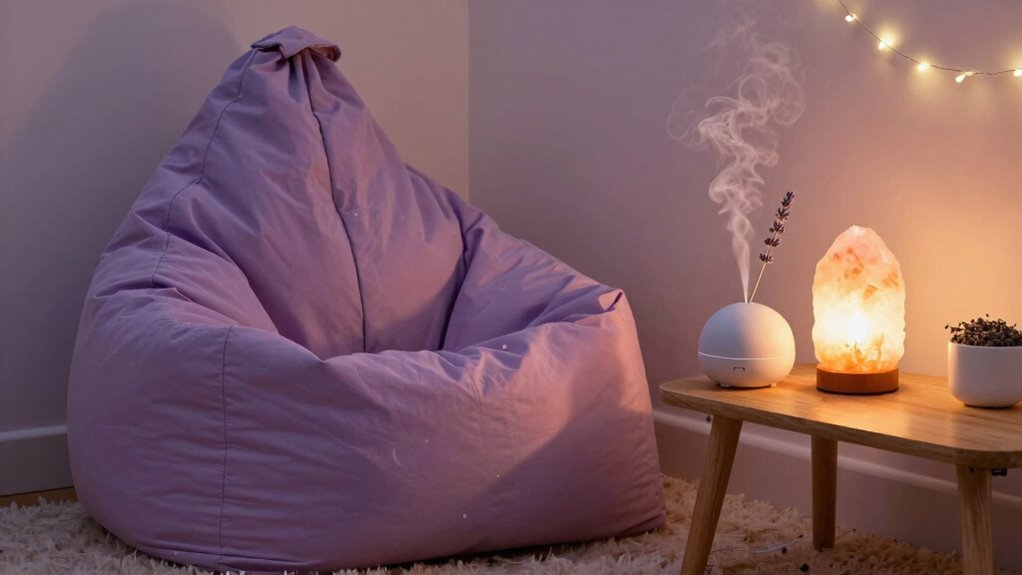
Adding calming sounds and aromas can transform a quiet-room into a soothing sanctuary for your child. Incorporating gentle sounds, like soft music or nature noises, supports sensory integration and helps your child relax. Music therapy can be especially effective, as it promotes calmness and reduces anxiety. Aromas such as lavender or chamomile can also enhance the calming environment, triggering relaxation through scent receptors. Keep the volume low and consistent to avoid overstimulation. Use a diffuser or a gentle sound machine to create a steady, soothing background. These sensory cues help your child wind down faster by signaling that it’s time to relax, making the quiet room a more effective retreat for calming down.
Maintaining Consistency: Tips for Keeping the Quiet Room Effective
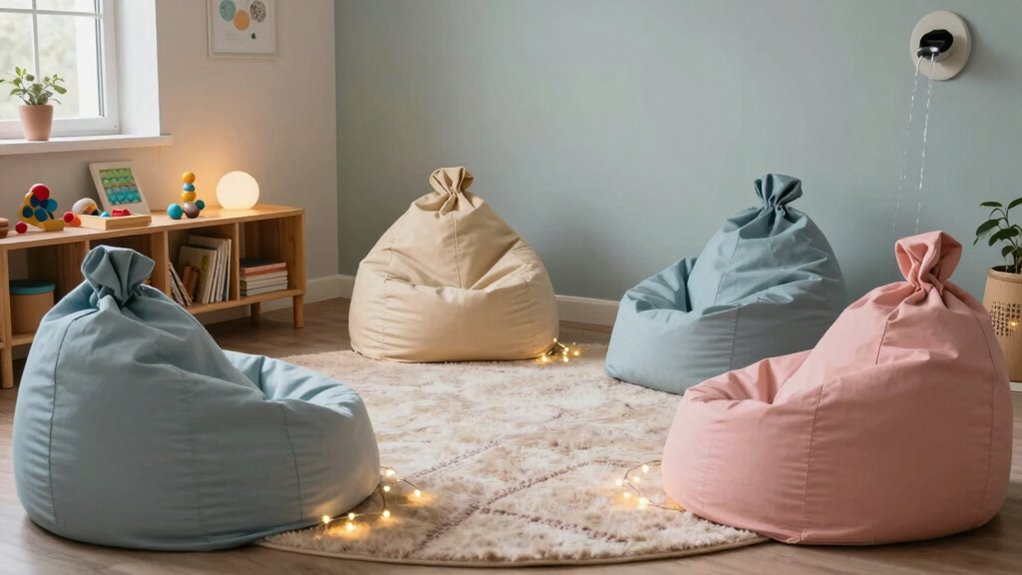
Maintaining consistency is key to ensuring the quiet room remains an effective space for calming your child. Establish clear consistency routines so your child knows what to expect each time they enter the space. Use positive reinforcement to encourage calm behavior, like praising your child when they settle peacefully or offering small rewards for following routines. Keep the environment stable by sticking to the same calming sounds, aromas, and lighting, so your child feels secure. To reinforce routines, you might:
Consistency creates a secure, calming space that helps your child feel safe and relaxed.
- Create a visual schedule for quiet-time activities
- Use consistent language when guiding your child into the quiet room
- Keep the setup unchanged to build familiarity
- Reinforce positive behaviors with praise or rewards
This consistency helps your child associate the quiet room with relaxation and security.
Adjusting the Quiet Room as Your Child Grows and Their Needs Change
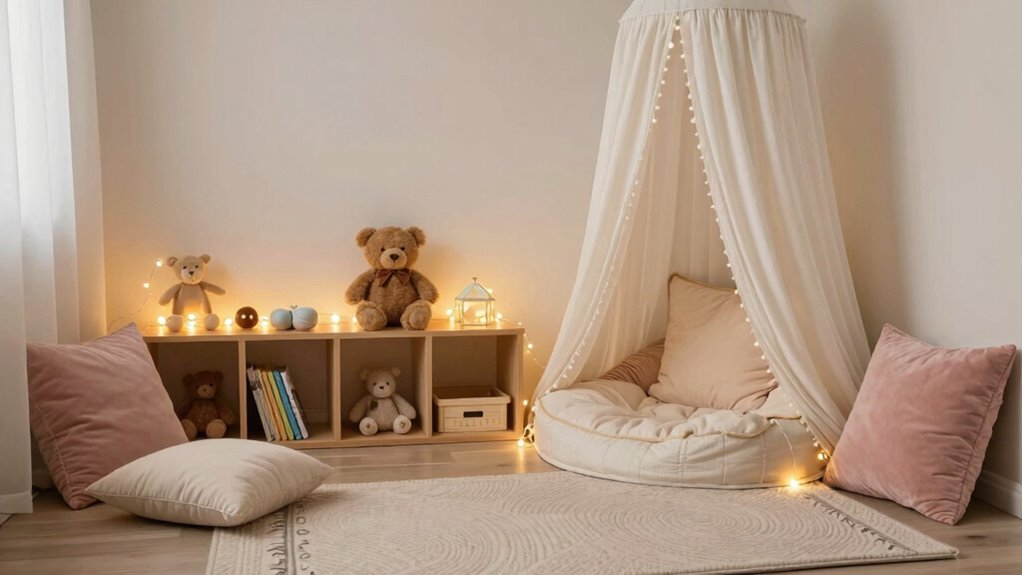
As your child grows, their needs and preferences for a calm space will naturally evolve, making it important to adjust the quiet room accordingly. You might replace simple plush toys with interactive toys that challenge their developing skills, or swap out basic puzzles for educational games that promote learning. Consider redesigning the space to suit their interests and age. Here’s a visual idea:
| Age Range | Features to Add | Focus Area |
|---|---|---|
| Toddlers | Soft, colorful plush toys | Comfort and sensory input |
| Preschool | Interactive toys, storybooks | Engagement and learning |
| Early Elementary | Educational games, puzzles | Cognitive development |
| Older Kids | Art supplies, calming music | Creativity and relaxation |
| Teenagers | Relaxation corner, tech-free zone | Independence and peace |
Frequently Asked Questions
How Can I Personalize the Quiet Room for My Child’s Preferences?
You can personalize the quiet room by incorporating your child’s favorite colors and calming decor. Use custom lighting, like dimmable lamps or fairy lights, to create a soothing atmosphere. Add cozy textiles such as soft blankets and plush pillows that appeal to their comfort preferences. Including familiar items or sensory toys can make the space more inviting. This tailored environment helps your child relax more quickly and feel secure in their quiet space.
What Safety Considerations Are Important When Designing a Quiet Room?
You’ll want to prioritize fire safety and furniture stability to avoid a quiet room disaster. Secure heavy furniture to the wall to prevent tipping, and choose flame-retardant fabrics and materials. Keep electrical outlets covered, and install smoke detectors nearby. Remember, a safe space isn’t just about calming vibes—it’s about preventing chaos, so double-check these safety measures before your child relaxes in their peaceful retreat.
How Long Should My Child Spend in the Quiet Room Before Bed?
You should aim for about 15-30 minutes in the quiet room before bed. This helps establish consistent sleep routines and enhances bedtime rituals, signaling to your child that it’s time to wind down. Keep the time calming and avoid overstimulating activities, so your child moves seamlessly into sleep. Consistency is key, so stick to the same duration nightly, reinforcing the peaceful environment needed for restful sleep.
Are There Specific Calming Scents Recommended for Children’s Bedrooms?
Yes, calming essential oils like lavender, chamomile, and frankincense are popular for children’s bedrooms. These scents offer aromatherapy benefits, helping your child relax and feel safe. Use a diffuser or a few drops in a safe, diluted form to create a soothing atmosphere. Always make sure the oils are child-safe and consult a pediatrician if you’re unsure. This gentle environment can make bedtime more peaceful.
How Can Parents Encourage Their Child to Use the Quiet Room Consistently?
Imagine your child’s peaceful sanctuary, waiting to become a calming haven. To encourage consistent use, introduce music therapy and sensory toys as enticing tools, making the quiet room irresistible. Gently establish a routine, praising their efforts, and gradually increase the time spent there. Keep the experience positive and engaging, so your child enthusiastically looks forward to winding down in the quiet room, turning it into a cherished part of their daily routine.
Conclusion
Creating a peaceful quiet room helps your child settle down faster and sleep better. For example, a parent who added soft lighting and familiar comfort objects noticed smoother bedtimes. Keep the space calm and consistent, adjusting it as your child grows. When your child feels safe and relaxed in their special space, bedtime becomes less stressful for both of you. With a cozy, clutter-free environment, you set the stage for peaceful nights and happy mornings.
Halloween Picks
halloween
As an affiliate, we earn on qualifying purchases.