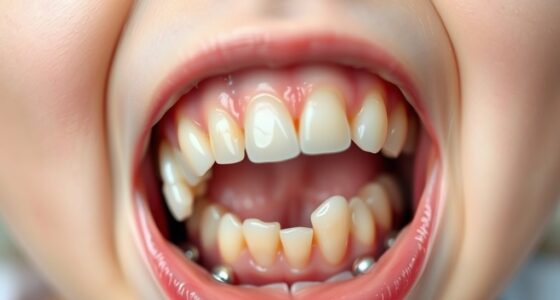

If you breathe through your mouth at night, it leaves signs you might notice before bad breath appears. Look for dry lips, sore throat, nasal congestion, or waking up feeling unrefreshed. These clues can point to airway problems or nasal blockages. Paying attention helps catch issues early. Keep noticing these hints, and you’ll discover ways to improve your sleep and oral health more effectively.

Turn the school run and nap time into listening time
- Thousands of audiobooks, podcasts and originals
- Listen on your phone, tablet or Echo — also offline
- Cancel anytime
Key Takeaways
- Mouth breathing causes dry lips and sore throat, serving as visible clues beyond bad breath.
- Signs like nasal congestion and persistent dry mouth indicate airway obstruction and mouth breathing.
- Mouth breathing can lead to dental issues such as cavities and gum infections, revealing health concerns.
- Sleep disturbances and daytime fatigue suggest ongoing airway problems linked to mouth breathing.
- Observing these symptoms helps identify mouth breathing early, enabling targeted management and better health outcomes.
As an affiliate, we earn on qualifying purchases.
How Can You Tell If You’re Mouth Breathing at Night?

If you’re unsure whether you’re mouth breathing at night, there are several signs to watch for. One common indicator is nasal congestion, which can make breathing through your nose difficult, prompting mouth breathing instead. Pay attention to your sleep position—sleeping on your back often makes mouth breathing more likely, especially if your jaw drops open during sleep. You might notice a dry or chapped mouth upon waking, or a sore throat, which are signs you’re breathing through your mouth. If your partner mentions you breathe loudly or you wake up feeling unrefreshed, it could also point to mouth breathing. These clues help you identify if nasal congestion and sleep position are contributing to your nighttime breathing habits. Additionally, sleep comfort tools like specialized pillows or mattress toppers can sometimes help improve your sleep posture and reduce mouth breathing. Recognizing these signs early can guide you in seeking appropriate treatments or nasal decongestants to improve your breathing, which may also involve addressing underlying issues such as airway obstruction or other breathing difficulties. Sometimes, airway assessment by a healthcare professional can provide insights into potential structural issues affecting your breathing. Being aware of sleep-related breathing issues can help you take steps towards better sleep quality and overall health.
Dry Mouth and Sore Throat: Signs of Airway Obstruction
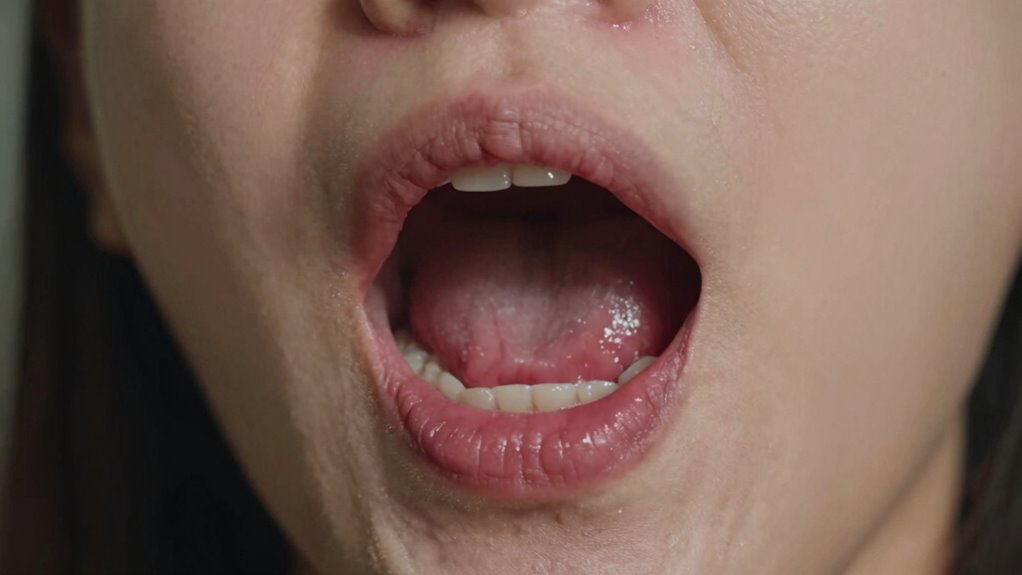
When your nasal passages are blocked or your airway is obstructed during sleep, your body compensates by breathing through your mouth. This often results in dry mouth and a sore throat upon waking. Nasal congestion from allergic reactions can make breathing difficult, forcing you to mouth breathe more frequently. As your mouth dries out, saliva production decreases, leading to discomfort and increased risk of irritation. The sore throat occurs because the dry air irritates your throat tissues, especially if you’re breathing through your mouth for hours. You might also notice a persistent feeling of needing to clear your throat or a scratchy sensation. Recognizing these symptoms early can help you address underlying issues, like allergies or nasal obstructions, and improve your sleep quality.
Dental Problems Linked to Mouth Breathing

Have you noticed more dental issues lately? Mouth breathing, often caused by nasal congestion, can *considerably* impact your oral health. When you breathe through your mouth, saliva production decreases, leading to dry mouth. This dry environment fosters bacterial growth, increasing the risk of cavities, gum infections, and bad breath. You might also notice increased plaque buildup and tooth decay over time. Additionally, mouth breathing can cause misalignment of teeth and jaw discomfort as your oral tissues adapt to altered airflow. Poor nasal airflow forces you to breathe through your mouth constantly, disrupting your oral health and making you more prone to dental problems. Environmental impact of tissue paper can also influence overall respiratory health, which indirectly affects breathing patterns and dental well-being. Addressing nasal congestion and encouraging nasal breathing can help protect your teeth and gums from these issues. Recognizing the effects of mouth breathing early can help prevent long-term dental complications.
Sleep Disruptions and Daytime Fatigue From Mouth Breathing

Mouth breathing during sleep often leads to frequent awakenings and restless nights, disrupting your rest cycle. When you breathe through your mouth, you may not get enough oxygen, which affects both your oral health and respiratory health. Poor sleep quality makes you feel tired and less alert during the day, impairing focus and productivity. You might also notice increased daytime drowsiness, headaches, or irritability. Over time, mouth breathing can cause dry mouth, sore throat, and increased risk of infections, further impacting your overall health. The constant airflow can dry out your airways, making you more prone to congestion and breathing difficulties. Incorporating sleep aids and gear designed to promote nasal breathing can help improve your sleep quality. Recognizing the signs of mouth breathing early can encourage timely intervention and better management of your sleep quality. Understanding the underlying causes of mouth breathing can also guide more effective treatment options. Addressing these disruptions is essential for restoring restful sleep and maintaining your health, helping you wake up refreshed and ready for the day. Additionally, poor nasal airflow can sometimes be linked to anatomical factors or issues like piercing-related nasal irritation, which may contribute to mouth breathing and require medical attention. Identifying and addressing these anatomical factors can significantly improve breathing during sleep.
When to See a Doctor About Nighttime Mouth Breathing

If you notice persistent difficulty breathing at night, it’s time to see a doctor. Frequent sleep disruptions or loud snoring can also signal a problem that needs medical attention. Addressing these signs early can help improve your sleep and overall health. Recognizing sleep-related breathing issues is crucial for timely intervention. Moreover, understanding digital literacy can empower parents to identify online risks that might affect their child’s sleep routines or overall well-being. Being aware of hydrotherapy techniques and their benefits may also assist in managing stress or discomfort related to sleep disturbances. Additionally, considering astrological signs might provide insights into personal traits that influence sleep patterns and habits. Paying attention to growth mindset principles can encourage children to develop healthier habits around sleep and self-care.
Persistent Breathing Difficulties
Persistent breathing difficulties during the night warrant prompt medical attention, especially if they interfere with your sleep quality or daily functioning. If you notice ongoing struggles with breathing, it could signal issues like nasal congestion or airway obstruction. Maintaining good oral hygiene is essential, but it won’t resolve underlying breathing problems. Instead, focus on your nasal health—blocked or inflamed nasal passages can force you to breathe through your mouth, worsening the issue. If these difficulties persist despite nasal care, it’s time to see a doctor. They can evaluate for conditions like sleep apnea or allergies, which may require targeted treatment. Paying attention to breathing science can help you understand how airway issues impact your health. Addressing persistent breathing issues early helps improve your sleep, oral health, and overall well-being. Additionally, understanding the role of nasal passages in airflow can guide effective treatment strategies. Recognizing the significance of natural airflow in maintaining proper breathing can further aid in managing and preventing nighttime mouth breathing issues, especially when combined with a comprehensive understanding of airway anatomy. Researchers also emphasize that airway structure plays a crucial role in overall respiratory function and health.
Sleep Disruptions or Snoring
When mouth breathing during sleep becomes frequent, it often leads to noticeable disruptions like loud snoring or restless nights. These sleep disturbances can affect your overall quality of rest and may signal underlying issues with nasal passages, which can hinder proper airflow. Over time, persistent mouth breathing can impair orofacial development, leading to structural changes in your face and jaw. If you notice loud snoring, gasping, or frequent awakenings, it’s time to see a doctor. Addressing the root cause—such as nasal congestion or airway obstructions—can improve sleep quality and prevent long-term health problems. Early intervention helps restore normal breathing during sleep, supports healthy orofacial development, and reduces the risk of sleep-related disorders.
Simple Steps to Detect and Manage Mouth Breathing

Detecting mouth breathing at night can be straightforward if you know what signs to look for. Watch for dry lips, a sore throat in the morning, or a constant nasal congestion. To manage it, start with simple nasal exercises to improve airflow. Using breathing aids like nasal strips can also help keep your airways open. Consider practicing nasal breathing during the day to build better habits. You might also try humidifiers to reduce nasal dryness. If these steps don’t work, consult a healthcare professional for personalized advice. Remember, consistent monitoring and small adjustments can notably reduce mouth breathing. Keep an eye on your symptoms and be proactive in managing your airflow for better sleep quality and overall health. Incorporating smart thermostat setup and air quality improvements can also contribute to a more comfortable sleeping environment, reducing triggers for mouth breathing. Improving your environment’s indoor air quality can make a significant difference in managing nasal congestion and mouth breathing.
Frequently Asked Questions
Can Mouth Breathing Cause Long-Term Facial Development Issues?
Yes, mouth breathing can cause long-term facial development issues. When you breathe through your mouth, it can alter your facial structure by affecting the growth of your jaw and facial bones. This habit often leads to poor jaw alignment and a sunken or elongated face over time. Addressing mouth breathing early can help prevent these developmental problems, ensuring your facial features develop properly and maintain healthy jaw alignment.
How Does Mouth Breathing Affect Children’s Growth?
Think of your child’s growth as a delicate tree; mouth breathing during sleep can stunt its branches. It impacts sleep posture and airway health, causing misaligned facial development and crooked teeth. When your child breathes through their mouth, they miss out on the benefits of proper nasal airflow, which supports ideal growth. Addressing mouth breathing now helps guarantee their developmental path stays straight and strong, like a sturdy, healthy tree.
Are There Specific Sleep Positions That Worsen Mouth Breathing?
Certain sleep positions can worsen mouth breathing by affecting your breathing patterns. Sleeping on your back often encourages the tongue and soft tissues to block airways, making mouth breathing worse. Conversely, sleeping on your side can help keep airways open and promote nasal breathing. Avoid positions that put pressure on your face or neck, as these can restrict airflow and increase mouth breathing, leading to disrupted sleep and other issues.
Can Mouth Breathing Lead to Increased Risk of Respiratory Infections?
Yes, mouth breathing can increase your risk of respiratory infections. When you breathe through your mouth, especially during sleep, nasal congestion and sinus infections become more likely because your airways don’t get filtered properly. This dryens your throat and weakens your immune defenses, making it easier for bacteria and viruses to enter. To protect yourself, address nasal congestion and consider improving your sleep position to reduce mouth breathing.
What Are Natural Remedies to Reduce Mouth Breathing at Night?
Think of your nose as a gatekeeper, and you can help it stay alert. To reduce mouth breathing, try using nasal strips to open your nasal passages comfortably. Sipping herbal teas before bed can also soothe your airways, making nasal breathing easier. These natural remedies encourage better airflow overnight, helping you breathe through your nose and improve your sleep quality naturally.
Conclusion
Your breath is like a lighthouse guiding your health through the night’s fog. When you notice dry mouth, sore throat, or restless sleep, it’s signals from your body’s lighthouse warning you of hidden trouble. By paying attention and taking action, you can steer back to clear skies and restful nights. Don’t ignore these clues—they’re your beacon, guiding you toward better breathing, better health, and brighter mornings.
Fall Picks
fall essentials
As an affiliate, we earn on qualifying purchases.