

The 2025 fluoride guidelines help you understand how to protect your child’s teeth effectively while reducing the risk of fluorosis. They recommend adjusting fluoride levels in community water supplies, dental products, and programs based on your child’s age and cavity risk. The new standards emphasize personalized care, professional guidance, and community efforts to promote healthy smiles. Keep exploring to learn how these updated guidelines can help you make informed decisions for your child’s oral health.
Key Takeaways
- The 2025 guidelines adjust fluoride levels in water and dental products to balance cavity prevention and fluorosis risk.
- They promote personalized fluoride strategies based on child’s age, diet, and cavity risk assessment.
- Public health initiatives now include community water fluoridation adjustments and educational campaigns.
- Dental professionals are encouraged to tailor fluoride recommendations and supervise supplemental treatments for high-risk children.
- The guidelines aim to enhance children’s oral health through informed, evidence-based fluoride use and community efforts.
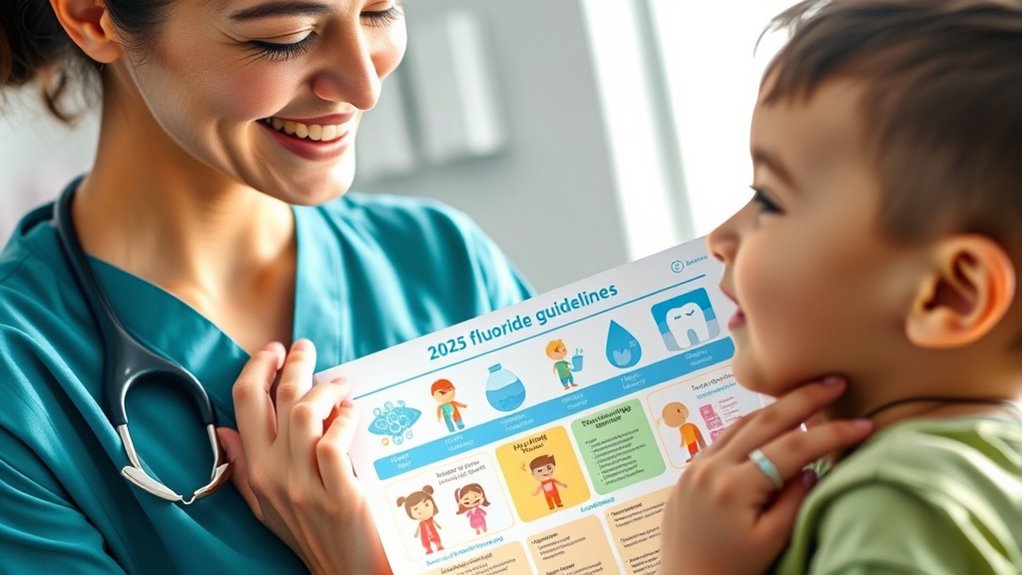
As the 2025 fluoride guidelines for children come into effect, it’s important for parents and caregivers to understand what these changes mean for your child’s dental health. These new policies aren’t just about adjusting fluoride levels; they reflect a broader shift in how public policies aim to protect and promote the oral health of your little ones. Staying informed helps you make better decisions about your child’s dental care and ensures you’re aligned with the latest health standards.
Understanding the 2025 fluoride guidelines helps parents make informed choices for healthier children’s smiles.
The updated guidelines set specific fluoride concentration levels for community water supplies, dental products, and public health programs. The goal is to strike a balance—maximizing the cavity-fighting benefits of fluoride while minimizing the risk of fluorosis, a condition caused by excessive fluoride intake that can affect the appearance of teeth. Because fluoride is so effective at preventing tooth decay, these policies are designed to maximize its use without overexposing children. As a parent, you should pay attention to the fluoride levels in your local water supply and consult your child’s dentist about the best oral health practices, especially if your community has adjusted fluoride concentrations recently.
Public policies now emphasize the importance of personalized dental health strategies. Instead of a one-size-fits-all approach, health authorities encourage tailored recommendations based on your child’s age, diet, and risk factors for cavities. For example, children at higher risk may benefit from supplemental fluoride treatments or specific toothpaste with higher fluoride content, administered under professional supervision. Conversely, for children with a lower risk, the focus might be on routine brushing and diet management to prevent unnecessary fluoride exposure. This targeted approach underscores the importance of working closely with dental professionals who stay updated on the latest guidelines and public policies affecting fluoride use.
Another critical aspect of these new policies is increased public awareness campaigns. They aim to educate parents and caregivers about appropriate fluoride use, helping you understand how to incorporate fluoride-containing products safely into your child’s daily routine. Schools and community health programs are also playing a role by implementing policies that support effective fluoride use, such as supervised brushing programs and community water fluoridation adjustments. These collective efforts reinforce the idea that protecting your child’s dental health involves a combination of informed choices and supportive public policies.
Ultimately, the 2025 fluoride guidelines are about creating a safer, more beneficial framework for preventing dental decay in children. By understanding these changes, you can better advocate for your child’s oral health, stay informed about public policies, and ensure they receive the most appropriate, evidence-based care. Being proactive now sets the foundation for healthier smiles in the future, aligned with evolving public health standards.

Peppermint Coconut Oil Pulling Mouthwash, Fast Acting & Visible Effect in Days, Deep Cleaning for Teeth & Gum, Fresh Breath, Alcohol-Free Natural Rinse Kit with Tongue Scraper for Adults & Kids
- Natural Ayurvedic Formula: Contains 100% organic coconut oil
- Targeted Oral Cleaning: Reduces impurities and supports gums
- Fast-Acting Freshness: Feel a difference in 20 seconds
As an affiliate, we earn on qualifying purchases.
Frequently Asked Questions
How Will These New Guidelines Affect Children With Fluoride Allergies?
If your child has a fluoride allergy, the new guidelines won’t modify their allergy management plan. You should continue to avoid fluoride-containing products and consult your healthcare provider for alternative treatments. These might include special oral hygiene routines or fluoride-free dental products. It’s essential to stay vigilant about any allergic reactions and keep up with regular dental checkups to ensure your child’s safety and oral health despite the new guidelines.
Are There Any Risks for Children With Certain Medical Conditions?
Think of fluoride as a double-edged sword; for children with certain medical conditions, it can pose risks. You need to contemplate medical condition considerations carefully, as fluoride sensitivity risks may be higher if your child has specific health issues like kidney problems or allergies. Always consult your pediatrician to assess these risks, ensuring they balance the benefits of fluoride with potential safety concerns tailored to your child’s unique health needs.
Will There Be New Fluoride Products Specifically for Children?
Yes, there will be new fluoride products specifically for children. Manufacturers are developing children-specific fluoride formulations that are safer and more effective, tailored to different age groups and dental needs. These products may include lower fluoride concentrations and unique delivery methods to guarantee safe use. You’ll find these formulations available in various forms like toothpaste, rinses, and gels, making it easier to protect your child’s dental health while minimizing risks.
How Do These Guidelines Compare to Previous Fluoride Recommendations?
You’ll find that the new fluoride guidelines recommend a slightly lower fluoride dosage for children, emphasizing more targeted preventive strategies. Compared to previous recommendations, they focus on optimizing protection while minimizing risks of fluorosis. For example, fluoride application frequency is carefully adjusted, ensuring children get enough to prevent cavities without overexposure. These updates aim to improve oral health outcomes, making preventive strategies more effective and tailored to children’s needs.
What Training Will Dentists Need to Implement the New Guidelines?
You’ll need specific dentist training to effectively implement the new fluoride guidelines. This training will cover updated protocols, safety measures, and appropriate fluoride application techniques for children. By participating in this education, you’ll be better equipped to adhere to the guidelines, guarantee patient safety, and provide ideal care. Ongoing professional development and reviewing guideline updates will also help you stay current and confidently integrate these changes into your practice.
Conclusion
As these new fluoride guidelines for children take effect in 2025, you might wonder what changes lie ahead. Will they mean better protection or new challenges? The future holds important decisions for parents, caregivers, and health professionals alike. Stay informed and prepared, because the next chapter in children’s dental health is just around the corner. Are you ready to embrace these changes and ensure the best for your child’s smile? The answers are nearer than you think.