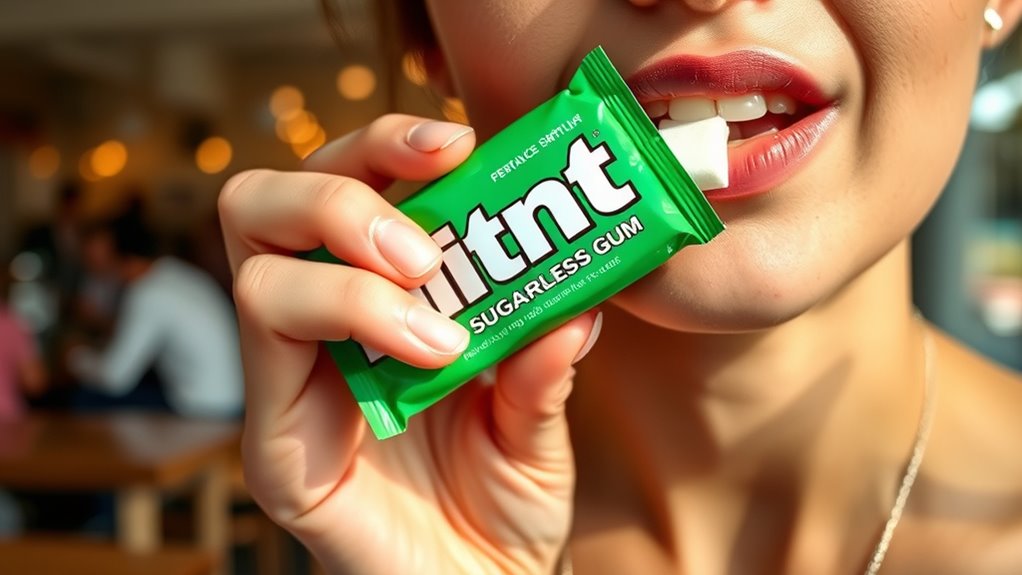

Chewing sugarless gum after meals helps you support your oral health by neutralizing acids, increasing saliva flow, and washing away food particles and bacteria. It reduces the risk of cavities, plaque buildup, and tooth decay while keeping your breath fresh. This simple habit can fit easily into your routine and provide long-term benefits for healthier teeth and gums. Keep exploring to discover more ways sugarless gum can boost your dental care.

Turn the school run and nap time into listening time
- Thousands of audiobooks, podcasts and originals
- Listen on your phone, tablet or Echo — also offline
- Cancel anytime
Key Takeaways
- Chewing sugarless gum stimulates saliva production, neutralizing acids and reducing the risk of tooth decay after meals.
- It helps remove food particles and bacteria, supporting natural cleaning and preventing plaque buildup.
- Sugarless gum freshens breath quickly, boosting confidence when brushing isn’t immediately possible.
- Chewing gum restores oral pH balance, protecting teeth from acid erosion caused by sugary or starchy foods.
- Incorporating gum into routines is a convenient way to enhance long-term oral health and maintain cleaner, healthier teeth.
Chewing sugarless gum offers a simple yet effective way to improve your oral health and boost your overall well-being. When you chew gum after meals, you’re actively supporting your dental health and maintaining good oral hygiene. This practice can help reduce the risk of cavities and prevent plaque buildup, which are key concerns for anyone wanting to keep their teeth healthy. The act of chewing stimulates saliva production, which plays a crucial role in neutralizing acids produced by bacteria in your mouth. These acids are often responsible for eroding tooth enamel and causing decay. By increasing saliva flow, you create a natural barrier that washes away food particles and bacteria, helping to protect your teeth long after you’ve finished eating.
You might not realize it, but the benefits of chewing sugarless gum extend beyond just cleaning your teeth. It also helps freshen your breath, which can be a real confidence booster throughout the day. Unlike gum with sugar, sugarless varieties don’t feed harmful bacteria in your mouth, so they don’t contribute to cavities. Instead, they promote oral hygiene by supporting the natural cleaning process that saliva provides. This makes sugarless gum a smart choice, especially when brushing isn’t immediately possible after a meal. It’s a quick, convenient way to keep your mouth feeling fresh and your dental health on track.
Furthermore, chewing sugarless gum after meals can help maintain the pH balance in your mouth. When you eat, especially sugary or starchy foods, acids can build up and lower the pH level, increasing the risk of tooth decay. Chewing stimulates saliva, which helps restore the pH balance and creates an environment less hospitable to harmful bacteria. This process not only protects your teeth but also supports your overall oral hygiene efforts. By incorporating sugarless gum into your routine, you actively combat the effects of acidic foods and drinks, reducing your chances of developing cavities and other dental issues. Supporting oral health is essential for maintaining a bright and healthy smile.
In addition, chewing sugarless gum is a practical habit that can fit seamlessly into your daily routine. Whether you’re at work, on the go, or relaxing at home, it’s a discreet way to reinforce your oral health practices. It’s a small step that yields noticeable benefits over time, helping you maintain healthier teeth and gums. So, next time you finish a meal, consider reaching for that piece of sugarless gum. It’s an easy, effective way to support your dental health and keep your smile bright.
Products Worth Considering

Oral-B iO Series 3 Rechargeable Electric Toothbrush for Adults, Black, with 2 Brush Heads and Travel Case

BowFlex Results Series SelectTech Dumbbells

Philips Sonicare DiamondClean 9000 Electric Toothbrush Bundle, HX9912/72
As an affiliate, we earn on qualifying purchases.
Frequently Asked Questions
Can Chewing Gum Replace Regular Brushing and Flossing?
Chewing gum can’t replace regular brushing and flossing for maintaining oral hygiene. While it can help clean your teeth temporarily and stimulate saliva production, it doesn’t remove plaque or food debris as effectively as brushing and flossing do. Consider gum as a dental alternative to boost oral health, but always prioritize consistent brushing and flossing to prevent cavities and gum disease. Rely on thorough oral hygiene routines for the best results.
Are There Any Health Risks Associated With Chewing Sugarless Gum?
Chewing sugarless gum is like walking a tightrope—you need to be cautious of potential risks. Artificial sweeteners can cause digestive issues or headaches for some, and excessive gum chewing might lead to jaw tension or discomfort. While it’s generally safe in moderation, keep an eye on how your body reacts. Balance your habit to enjoy fresh breath without inviting unnecessary health worries.
How Does Sugarless Gum Affect Dental Fillings or Crowns?
Chewing sugarless gum generally doesn’t harm your dental fillings or crowns. It helps maintain dental integrity by increasing saliva flow, which neutralizes acids and strengthens enamel around restorations. However, consider material compatibility; some composite resins or crowns may react to certain ingredients in gum. Always check with your dentist if you notice sensitivity or changes around your fillings or crowns after chewing.
Is Chewing Gum Suitable for People With Braces?
Chewing gum with braces is like trying to navigate a busy river—you need to be cautious. While sugarless gum is generally orthondontic compatible, it can still cause gum adherence to brackets or wires, making cleaning tougher. If you choose to chew, opt for sugarless, soft gum, and do so carefully. Always check with your orthodontist first, so you don’t unintentionally disrupt your treatment or damage your braces.
Does Chewing Gum Help With Bad Breath Long-Term?
Chewing gum can help with long-term bad breath by improving breath freshness and reducing bacteria in your mouth. When you chew sugarless gum, saliva production increases, which washes away odor-causing particles and neutralizes acids. This continuous action can keep your breath fresher for longer periods. However, for persistent bad breath, it’s also important to maintain good oral hygiene and visit your dentist regularly, as gum alone might not suffice.
Conclusion
Chewing sugarless gum after meals offers simple yet effective benefits, like freshening your breath and boosting saliva production to fight cavities. Imagine Sarah, who started chewing gum after lunch and noticed her dentist praised her improved oral health during her last visit. By making this small habit part of your routine, you can enjoy a fresher mouth and healthier teeth with minimal effort. So, next time you finish a meal, give gum a try—it might just make a difference.