

The best time for your child’s first dental visit is by their first birthday or within six months of their first tooth erupting. This early check-up helps spot potential issues early, teaches good oral hygiene habits, and gets your child comfortable with the dentist. Starting dental visits early sets the stage for lifelong healthy smiles. To find out more about why timing matters and what to expect, keep exploring.

Turn the school run and nap time into listening time
- Thousands of audiobooks, podcasts and originals
- Listen on your phone, tablet or Echo — also offline
- Cancel anytime
Key Takeaways
- Schedule your child’s first dental visit by their first birthday or within six months of their first tooth eruption.
- Early visits help prevent oral health issues and establish lifelong good dental habits.
- Recognizing teething milestones allows for timely dental check-ups and advice.
- Dental visits during teething can provide relief tips and monitor tooth development.
- Regular early check-ups promote healthy teeth, gums, and positive attitudes toward dental care.
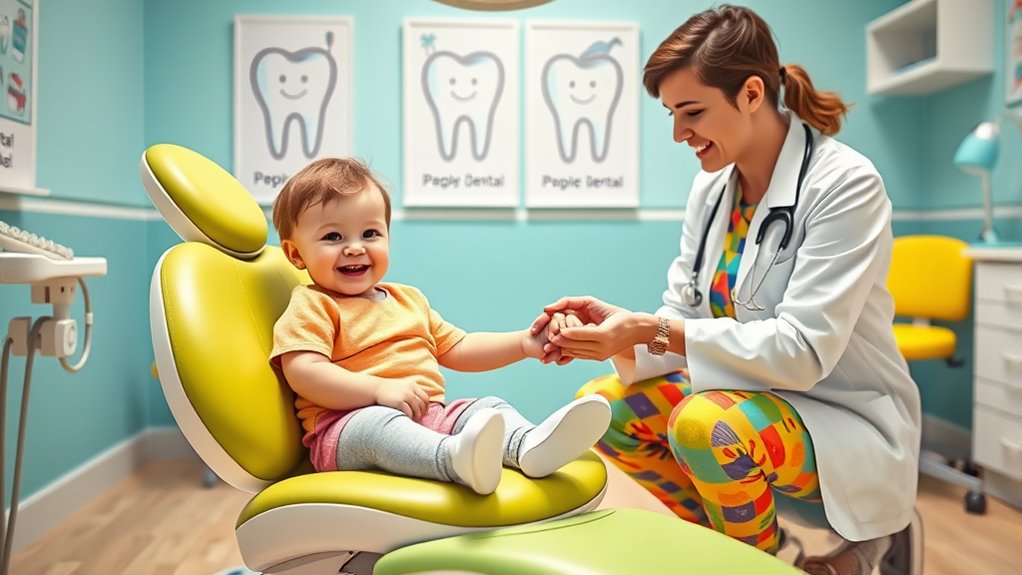
Many parents wonder when their child should have their first dental visit, and the answer is sooner than you might think. Waiting until your child’s teeth are fully erupted or until there’s a problem isn’t necessary. Instead, early dental visits set the foundation for a lifetime of healthy smiles. The American Academy of Pediatric Dentistry recommends scheduling your child’s first dental appointment by their first birthday or within six months of their first tooth appearing. This timing allows you to stay ahead of potential issues and helps your child become comfortable with dental visits early on.
Understanding teething milestones is key to knowing when to start. Typically, babies begin teething around six months, but it can happen as early as three months or as late as twelve months. During this period, many parents notice swollen gums, drooling, and fussiness. While teething can be uncomfortable, it’s also an important developmental phase. Your child’s first teeth will usually emerge in a predictable pattern, starting with the lower front teeth, followed by the upper front teeth, and then others. Monitoring these teething milestones helps you prepare for what’s ahead and ensures your child’s oral health gets the attention it needs early on.
Scheduling an early dental visit offers numerous benefits. It gives your child’s dentist a chance to perform a gentle oral examination, check for early signs of decay, and provide guidance on oral hygiene practices. During this visit, the dentist can also educate you on proper brushing techniques, fluoride needs, and diet choices that promote healthy tooth development. Early visits also help your child become familiar with the dental office environment, reducing anxiety that can develop later. Early dental visits are crucial for establishing good oral health habits from the start.
As an affiliate, we earn on qualifying purchases.
Frequently Asked Questions
What Signs Indicate My Child Needs an Urgent Dental Visit?
If your child experiences tooth pain or bleeding gums, you should seek an urgent dental visit. Tooth pain might indicate a cavity or infection, while bleeding gums could suggest gum disease or trauma. Don’t ignore these signs; prompt professional care is crucial to prevent further issues. Schedule an appointment quickly to diagnose the problem and ensure your child’s oral health stays on track.
How Can I Prepare My Child for Their First Dental Appointment?
Imagine your child’s first dental visit as a fantastic adventure! To prepare, make tooth brushing and dental flossing seem exciting—like a superhero mission. Talk about what the dentist will do in simple words, and stay positive. Bring their favorite toy or blanket for comfort. By creating a fun, relaxed vibe, you’ll help your child feel safe and enthusiastic for their first dental checkup!
Are There Specific Dental Issues Common in Infants?
Infants often face common oral infections like thrush and diaper rash, partly due to immature immune systems and infant tooth development. You should watch for white patches in the mouth or fussiness during feeding, which could indicate issues. Early dental visits help identify these problems early, ensuring proper care. Regular check-ups also support healthy infant tooth development, preventing future dental issues and promoting good oral hygiene habits from the start.
Should I Use Fluoride Toothpaste for My Baby?
Yes, you should use fluoride toothpaste for your baby, but only in small amounts. When choosing toddler toothpaste, look for one with the ADA Seal of Acceptance, ensuring fluoride safety. Use a smear or rice-sized amount to prevent swallowing, as young children tend to swallow toothpaste. This helps protect your child’s teeth from decay while ensuring safe fluoride use during their early dental development.
How Can I Help My Child Overcome Dental Anxiety?
To help your child overcome dental anxiety, focus on behavior management and comfort techniques. Talk to them about the visit positively, use gentle words, and keep the experience fun. Bring favorite toys or blankets for comfort, and stay calm yourself to set a reassuring tone. Avoid rushing or forcing, and praise your child’s bravery afterward. These strategies make the experience less intimidating and build confidence for future visits.
Conclusion
Remember, your child’s first dental visit often coincides with their first tooth or around their first birthday—coincidence or not, it’s the perfect time to start good habits. When you schedule that visit early, you set the stage for a lifetime of healthy smiles. So, keep an eye on those tiny teeth and trust your instincts; sometimes, the best timing just happens to be right when you least expect it.
Fall Picks
fall essentials
As an affiliate, we earn on qualifying purchases.