
Including antioxidant-rich foods like spinach, kale, broccoli, oranges, strawberries, and bell peppers in your diet can help strengthen your teeth. These foods fight free radicals, reduce inflammation, and support enamel repair by providing vitamins C, E, and flavonoids. They also promote healthy gums and inhibit bacteria that cause plaque. To discover more about how these foods boost your oral health and protect your teeth over time, keep exploring the options available.
Key Takeaways
- Foods rich in vitamins C and E, like citrus fruits and nuts, help strengthen enamel and promote tissue repair.
- Leafy greens such as spinach, kale, and broccoli provide antioxidants that reduce oral inflammation and support gum health.
- Berries and grapes contain polyphenols that inhibit bacteria growth, decreasing plaque and cavity formation.
- Foods high in flavonoids, including apples and onions, enhance collagen production for stronger tooth structure.
- Carrots and celery act as natural abrasives, stimulating saliva flow and helping neutralize acids and bacteria in the mouth.
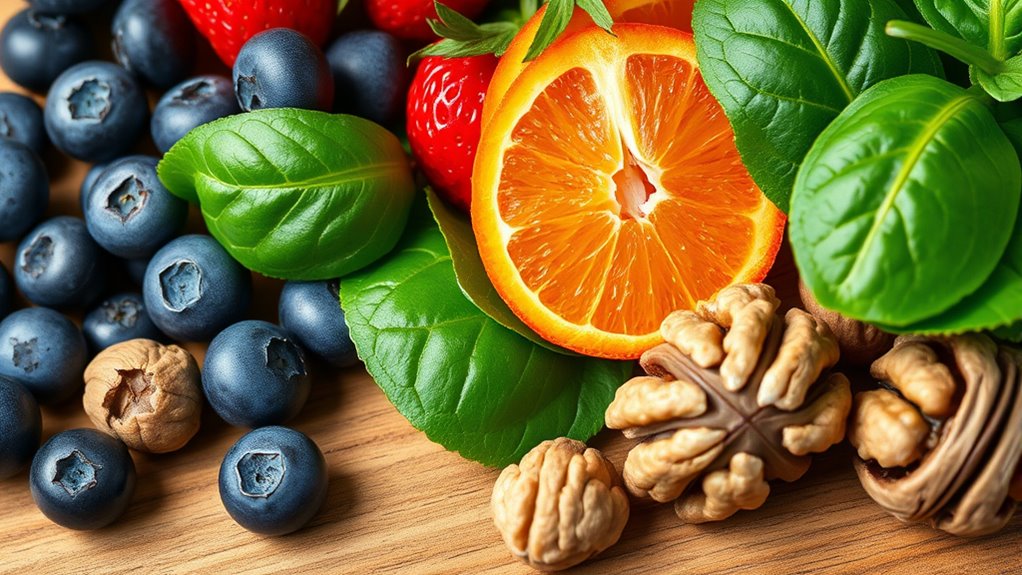
Antioxidant-rich foods play a essential role in supporting your overall health by fighting free radicals that can damage cells. When it comes to your teeth, these foods are especially beneficial for strengthening dental enamel and reducing oral inflammation. Dental enamel, the hard outer layer of your teeth, acts as your first line of defense against decay and sensitivity. Over time, exposure to acids, sugars, and bacteria can erode this protective barrier, making your teeth more vulnerable to cavities and erosion. Consuming antioxidant-packed foods helps neutralize harmful free radicals that contribute to enamel breakdown, helping you maintain stronger, healthier teeth. For example, foods rich in vitamin C and flavonoids, like berries and citrus fruits, support collagen production, which is essential for keeping your enamel resilient and repairing minor damage.
Oral inflammation, another common dental concern, can result from bacterial infections, gum disease, or irritation caused by harsh dental products. Chronic inflammation not only causes discomfort but also weakens the tissues supporting your teeth, increasing the risk of periodontal issues. Antioxidants are powerful anti-inflammatory agents. When you include foods like spinach, kale, and broccoli in your diet, you provide your body with nutrients that help combat inflammation in the gums and oral tissues. These foods contain high levels of vitamins A, C, and E, along with other phytochemicals that reduce swelling and promote healing. By regularly eating these antioxidant-rich vegetables, you help create a healthier environment for your gums and teeth, decreasing the likelihood of infection and periodontal disease.
Additionally, incorporating foods high in polyphenols can inhibit the growth of bacteria responsible for plaque formation and cavities, further supporting oral health. This not only helps preserve your dental enamel but also keeps your mouth cleaner, reducing the risk of oral inflammation. Incorporating these foods into your diet can be an effective, natural way to support your dental health without relying solely on oral hygiene products. Remember, maintaining good oral health isn’t just about brushing and flossing; your diet plays a essential role, particularly when it comes to strengthening enamel and controlling inflammation.
Frequently Asked Questions
Can Antioxidant-Rich Foods Reverse Existing Tooth Decay?
Antioxidant-rich foods can’t reverse existing tooth decay, but they help in tooth remineralization and cavity prevention. By reducing inflammation and neutralizing harmful free radicals, these foods support your teeth’s natural repair process. Eating more berries, nuts, and vegetables strengthens enamel and fights further decay. While they won’t fix damage already done, incorporating antioxidants into your diet boosts your chances of maintaining healthier, stronger teeth over time.
Are There Any Side Effects From Consuming High Antioxidant Foods?
Consuming high antioxidant foods can sometimes cause potential allergic reactions, especially if you’re sensitive to certain fruits or nuts. In rare cases, they might interfere with nutrient absorption, but generally, they’re safe when eaten in moderation. You should pay attention to how your body responds and consult a healthcare professional if you notice any adverse effects. Balance your diet to enjoy antioxidants’ benefits while minimizing risks.
How Quickly Can Antioxidants Improve Dental Health?
You might see improvements in your dental health within a few weeks, as antioxidants from dietary sources start to boost your oral defenses. Studies show that antioxidant absorption occurs quickly after consumption, helping reduce inflammation and fight bacteria. Consistently eating antioxidant-rich foods like berries and leafy greens can strengthen teeth over time, but visible results depend on your overall oral hygiene and diet. Keep up the good habits for best results!
Do Antioxidant Foods Benefit Gum Health as Well?
Yes, antioxidant foods benefit gum health by reducing oral inflammation and supporting gum tissue. When you include antioxidants in your diet, they help fight free radicals that cause gum disease and promote healing. You’ll notice healthier, less inflamed gums over time. So, eating a variety of antioxidant-rich foods like berries, nuts, and leafy greens can strengthen your gum tissue and improve overall oral health.
Are Supplements as Effective as Natural Antioxidant Foods?
Supplements can be effective, but natural antioxidant foods often have superior supplement efficacy due to better natural absorption. When you eat antioxidant-rich foods, your body absorbs and utilizes the nutrients more efficiently, supporting your oral health better. Supplements may help if you lack certain nutrients, but they usually don’t provide the same synergistic benefits as whole foods. For ideal teeth strength, prioritize a balanced diet with natural antioxidant sources.
Conclusion
By including antioxidant-rich foods in your diet, you’re giving your teeth the armor they need against decay and damage. Think of these nutrients as your mouth’s personal superheroes, fighting off harmful free radicals and keeping your smile bright. Make smart choices—add berries, nuts, and leafy greens to your meals—and watch your dental health flourish like a garden in full bloom. Remember, a strong smile starts with what you put on your plate!